
There is a very particular kind of kitchen magic that happens when a humble pot of milk turns into a glossy, stretchy ball of mozzarella. The first time I made it, I felt like I had unlocked a secret level of adulthood. The second time, I realized it is not about being fancy. It is about learning a new little skill with your hands.
This is the quick, under-an-hour version: warm milk, add citric acid and rennet, cut the curd, heat it, then stretch it like taffy until it turns smooth and elastic. You will end with fresh mozzarella that tastes like a cloud had a dairy phase.
Before you start
Quick reality check
Quick mozzarella is wonderfully doable, but it is also a little opinionated. Milk type, temperature, and even the brand and strength of rennet can change your results. If your first batch is slightly weird, congratulations: you are officially learning a hobby.
One more thing: this method relies on getting the acid dose and timing right. Temperature matters, yes, but quick mozzarella is a tiny chemistry experiment, too.
Food safety note
Use clean tools, work with fresh milk, and keep curds hot during stretching. If you are pregnant, immunocompromised, or serving someone who is, use pasteurized (not raw) milk and refrigerate the finished mozzarella promptly after it cools.
Ingredients and tools
Ingredients (makes about 10 to 16 oz, varies)
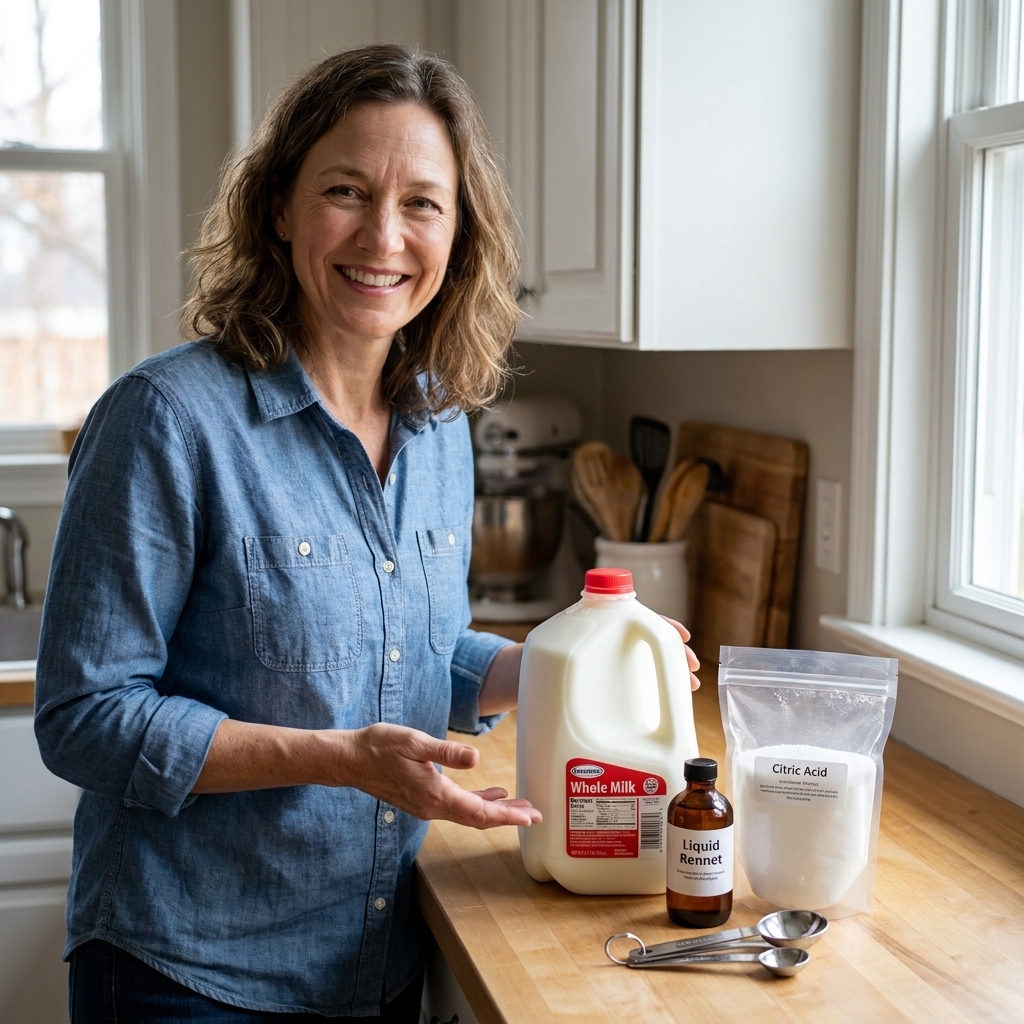
- 1 gallon whole milk (best: pasteurized, not ultra-pasteurized; raw milk can work but is not recommended for higher-risk eaters)
- 1 1/2 teaspoons citric acid (dissolved in 1/4 cup cool, non-chlorinated water)
- Rennet: 1/4 teaspoon liquid rennet dissolved in 1/4 cup cool, non-chlorinated water or the equivalent amount per your rennet’s package directions (strengths and tablet sizes vary)
- Kosher or non-iodized salt to taste (1 to 2 teaspoons is a good starting point)
- Optional: 1/4 to 1/2 cup cream if your milk is on the lean side and you want a richer mozzarella
Tools
- Large heavy pot (at least 6 quarts)
- Instant-read thermometer
- Long knife (for cutting curds)
- Slotted spoon
- Microwave-safe bowl or a second pot for hot whey water bath
- Colander
- Cheesecloth (helpful but optional for draining)
- Rubber gloves (highly recommended for stretching, the curd gets very hot)
Water tip: Chlorine can mess with rennet. If your tap water is heavily chlorinated, use filtered or bottled water for dissolving citric acid and rennet.
The under-an-hour method
Set yourself up with a calm workspace. I like to read the steps once, then start. This is very much a “warm milk, watch for changes” kind of project.
Step 1: Dissolve citric acid and rennet
- Dissolve 1 1/2 teaspoons citric acid in 1/4 cup cool water. Set aside.
- Dissolve your rennet in 1/4 cup cool water. Set aside.
Step 2: Acidify the milk
- Pour 1 gallon milk into your pot.
- Stir in the dissolved citric acid solution gently, just to combine.
- Heat the milk to 90°F (32°C) over medium to medium-low, stirring gently so you do not scorch the bottom.
Note: Gentle is the mood. We are not whisking. We are persuading.
Step 3: Add rennet and set the curd
- Remove the pot from heat.
- Stir in the dissolved rennet solution using up-and-down strokes for about 30 seconds.
- Cover and let it sit undisturbed for 5 to 10 minutes.
You are looking for a “clean break.” Use a clean knife to lift and split the curd. If it separates cleanly and the whey looks yellowish and clear, you are set. If it looks like yogurt and tears messily, give it a few more minutes.

Cut, cook, and drain
Step 4: Cut the curd
With a long knife, cut a grid pattern straight down through the curd into roughly 1-inch squares. Then angle the knife slightly to cut across and make a few diagonal cuts. Do not overthink it. The goal is to create pieces that can release whey.
Step 5: Heat to 105°F (40°C)
- Put the pot back on medium-low heat.
- Slowly heat the curds and whey to 105°F (40°C), gently stirring so the curds do not mat together.
- Once you hit temperature, hold for about 5 minutes.
The curds will firm up and look like soft, bouncy scrambled eggs. This is exactly the vibe.
Step 6: Drain
- Use a slotted spoon to scoop curds into a colander (lined with cheesecloth if you want less mess).
- Let drain for 1 to 5 minutes, until the curds stop dripping heavily.
- Save the whey. You can use it for stretching and for other recipes.

Stretch the curds
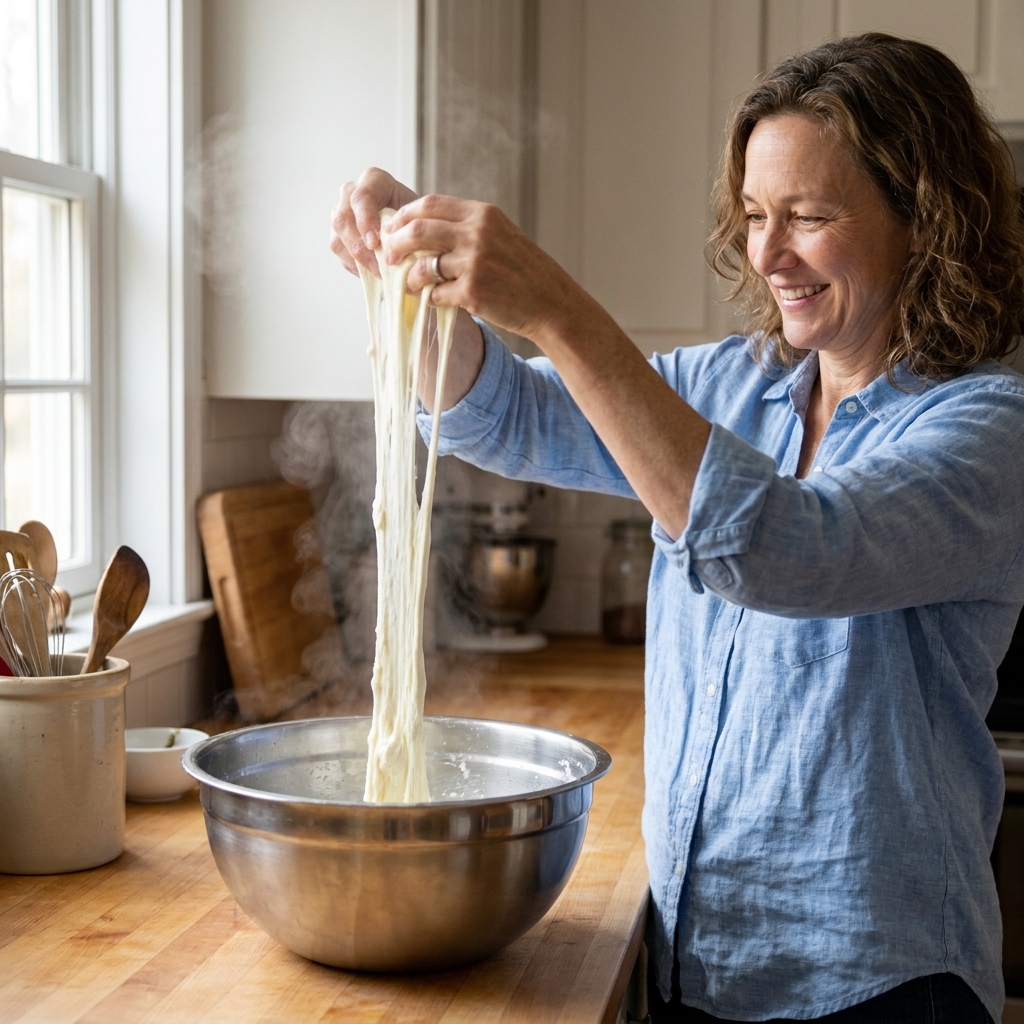
Stretching is where curds turn into mozzarella. You are heating the curd enough for the proteins to align and become stretchy. If it will not stretch, it is usually a heat or acidity issue, not a personal failing.
Option A: Microwave
- Put drained curds into a microwave-safe bowl.
- Microwave 60 seconds. Drain off whey.
- Microwave 30 seconds more. Drain again.
- Put on gloves. Sprinkle in salt and fold the curd over itself a few times.
- Stretch and fold like taffy until the surface turns smooth and glossy, usually 1 to 3 minutes. If it cools and resists, microwave in 10 to 15 second bursts.
Salting note: Add a little, stretch, taste, then decide. Too much salt too early can tighten the texture.
Option B: Hot whey bath
- Heat reserved whey (or a pot of water with a big pinch of salt) to about 170°F (77°C). It should be hot but not boiling.
- Submerge the curds in the hot whey for 30 to 60 seconds.
- With gloved hands or a spoon, fold and stretch the curd until smooth and elastic. Dip again as needed to keep it hot.
How you know it is ready: The mozzarella becomes shiny, cohesive, and stretches in long ribbons instead of tearing like damp bread.

Shape, chill, and eat
Step 7: Shape
Once your cheese is glossy and stretchy, shape it into:
- One big ball for slicing
- Two smaller balls for salads
- Little pearls for snacking, if you like a project inside your project
Step 8: Quick brine chill
Mix 2 cups cool water with 1 to 2 tablespoons salt. Drop the mozzarella in for 5 to 10 minutes to set the shape and lightly season the outside. Then remove and pat dry.
Eat warm if you want maximum tenderness, or refrigerate for later.

Troubleshooting
My curds did not set
- Likely cause: Ultra-pasteurized milk, old rennet, or chlorinated water.
- Fix next time: Use pasteurized non-UHT milk; check rennet expiration and strength; use non-chlorinated water for dissolving.
My curds are grainy or ricotta-like
- Likely cause: Milk got too hot too fast, or you stirred too aggressively.
- Fix next time: Heat slowly, stir gently, and stop stirring once the curd is set.
It will not stretch, it just tears
- Likely cause: Curds are not hot enough for stretching, or the acidity is off.
- Fix right now: Reheat in short bursts (microwave) or dip in 170°F whey until pliable.
- Fix next time: Measure citric acid carefully, verify your thermometer accuracy, and consider trying a different milk brand. If it consistently refuses to stretch even when hot, the curd may be too acidic or not acidic enough for this quick method.
It turned rubbery
- Likely cause: Overworked or overstretched, or overheated during stretching.
- Fix next time: Stretch only until glossy and cohesive, then stop. Treat it like bread dough: more handling is not always more love.
Milk note: homogenized vs non-homogenized
- Reality: Many people succeed with homogenized store milk, but some brands behave oddly.
- If yours keeps failing: Try non-homogenized (often labeled “creamline”) pasteurized milk, or switch brands before you assume you did something wrong.
Storage and serving
How to store fresh mozzarella
- Best day: Same day, within a few hours.
- Refrigerator: 2 to 3 days is realistic for good texture.
- How: Store in a covered container with a light brine (water plus salt) or a little whey. Tight, dry storage can make it tough.
Easy ways to use it
- Sliced with tomatoes, basil, olive oil, and flaky salt
- Torn onto pizza right after it comes out of the oven
- Stuffed into a grilled cheese with pesto
- Warm pearls tossed with roasted vegetables
If you end up with a “rustic” shape, consider it artisan. If it is lumpy, call it “hand-formed.” This is hobby logic, and it works surprisingly well.
Frequently asked questions
Do I really need rennet?
For this stretchy mozzarella style, yes. Acid alone makes cheeses like paneer or ricotta. Rennet is what helps create a curd structure that can later stretch.
Can I use store-bought milk?
Yes, as long as it is not ultra-pasteurized (UHT). Many grocery stores carry pasteurized whole milk that works well. If your label says ultra-pasteurized, save yourself the heartbreak and choose a different jug.
What is the difference between liquid rennet and tablets?
Both work. Liquid rennet is easy to measure. Tablets store well. The key is freshness, dissolving in cool non-chlorinated water, and following your brand’s conversion since strengths vary.
Can I make this without a microwave?
Absolutely. Use the hot whey bath method. It takes a little more hands-on dipping, but it is satisfying and very doable.
Next time is easier
If you make mozzarella once, you get cheese. If you make it twice, you get confidence. By the third time you start noticing the tiny signals: how the curd feels when it is ready to cut, how the whey changes color, how the stretch goes from stubborn to silky.
And if you are anything like me, you will start scanning thrift stores for a dedicated cheese pot. Because hobbies have a way of moving in when you are not looking.