
If you have ever spotted a little cluster of mushrooms on a damp trail and felt the urge to crouch down like a curious raccoon, welcome. Mushroom foraging is one of my favorite ways to slow down outside. It turns a walk into a treasure hunt, and it nudges you to notice trees, soil, weather, and seasons like you are learning a new language.
But we are going to be very clear, very early: mushroom foraging is a safety-first hobby . Some edible mushrooms have dangerous look-alikes, and mistakes can be serious or even fatal. The goal of this guide is not to make you fearless. It is to make you careful, confident, and the kind of forager who brings home stories even when you bring home zero mushrooms.
Note: This guide is written for North America. Seasons, species, and look-alikes vary by region, so use a regional field guide for your area and local expertise whenever possible.
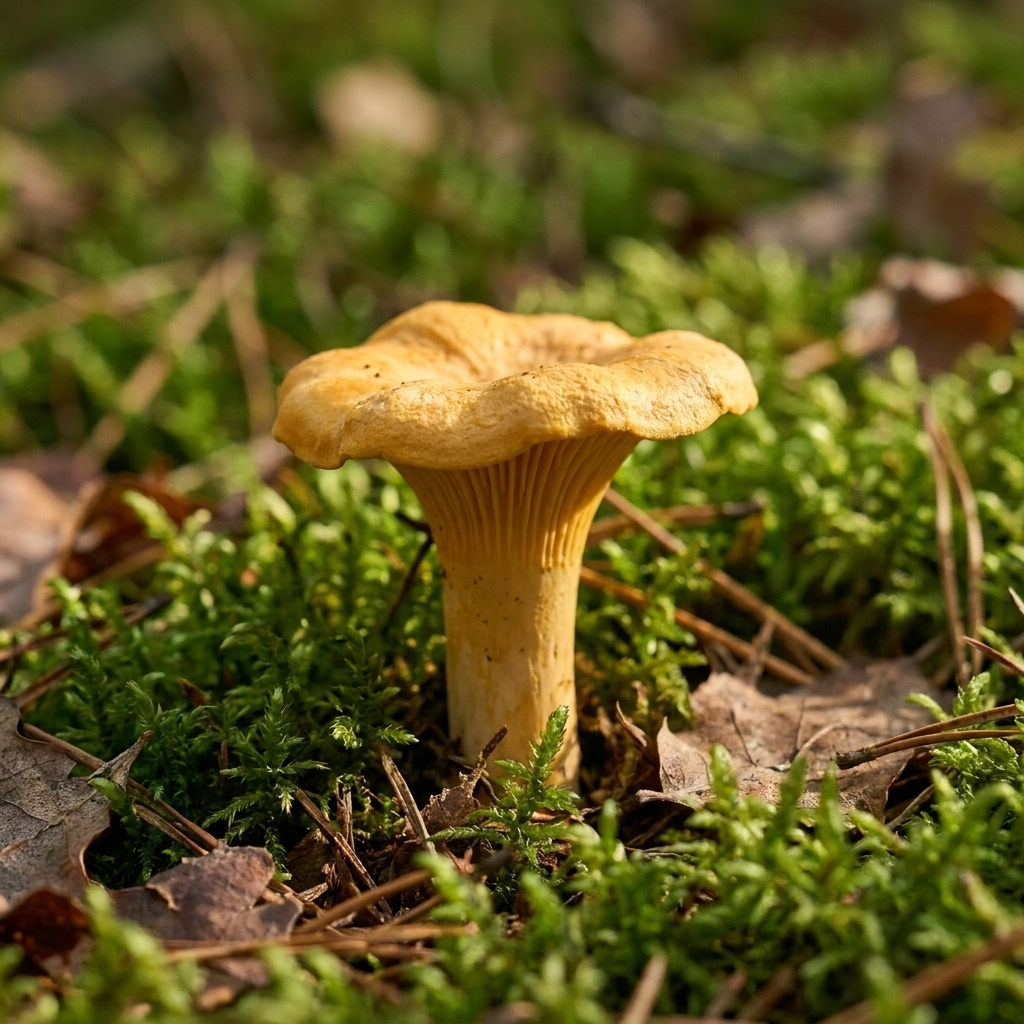
Start with the safety rules
- Never eat a wild mushroom unless you are 100% certain of the ID. Not 90%. Not “it looks like the picture.”
- Use at least two sources. A regional field guide plus a local club, experienced mentor, or an expert ID group is a great combo.
- Do not rely on apps alone. Apps can be helpful for suggestions, but they can also be confidently wrong.
- Do not taste-test. Nibbling, chewing, or “just a tiny bite” is not a safe identification method. Skip the folklore.
- Only eat mushrooms in good condition. Avoid old, soggy, wormy, or heavily decayed specimens.
- Try a small portion first. Even edible species can cause reactions for some people.
- Be extra cautious with higher-risk eaters. If someone is pregnant, immunocompromised, has liver or kidney disease, or has a complex medical history, consider avoiding wild mushrooms or check with a clinician first. Be conservative. For very young children, it is often simplest to skip wild mushrooms entirely.
- When in doubt, throw it out. Your compost pile can enjoy the adventure too.
Important: If you suspect mushroom poisoning, call Poison Control (US: 1-800-222-1222) right away, or seek emergency care. If you can do so safely, save a sample of the mushroom (and any cooking scraps) for identification.
Legal and ethical basics
Check rules before you pick
Foraging rules vary wildly by location. City parks may prohibit collecting. State parks often have restrictions. National forests frequently allow personal-use gathering but may require permits above certain amounts. Private land requires permission, even if the mushrooms are “just sitting there looking free.”
Forage gently
- Harvest lightly. Take a small portion from a patch so it can continue to reproduce and feed wildlife.
- Stay on durable surfaces when possible. Trampling can do more damage than careful picking.
- Leave no trace. Pack out trash, and avoid raking large areas of duff.
- Respect local ecology. Many mushrooms are part of mycorrhizal networks that support tree health. We are visitors.
When not to harvest
- Protected or sensitive areas: follow posted rules and avoid collecting where it is prohibited.
- Rare or sparse finds: if you only see one or two, consider leaving them.
- Heavily trafficked spots: popular trails and park edges can get over-picked fast.
- Contaminated areas: avoid roadsides, industrial sites, treated lawns, railways, and places with obvious runoff.
Cut vs. pull
You will hear opinions. In most cases, either cutting or gently twisting and pulling is fine. The key is to minimize disturbance and keep the site tidy. Local guidance may differ by species and habitat, so if your regional club has a preference, follow it. I like a gentle twist and a tidy “put the forest back” pat of leaves.
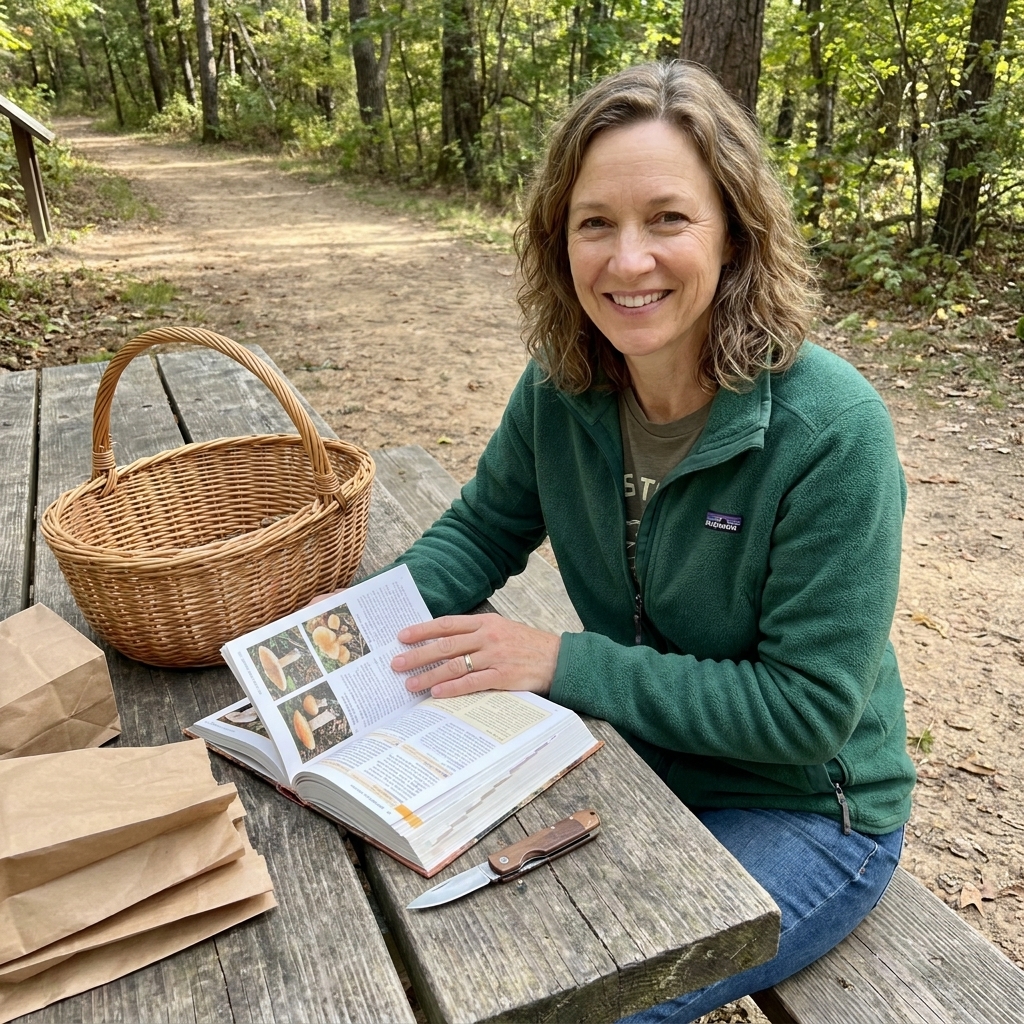
Your beginner kit
You do not need to look like a wilderness wizard, but a few simple tools make foraging safer and easier.
- Breathable container: a mesh bag or basket helps keep mushrooms from turning slimy. Some people also like mesh because it can drop spores as you walk, but do not treat that as a conservation strategy. The main win is airflow.
- Small knife: for clean harvesting and trimming dirty bases.
- Soft brush: an old paintbrush is perfect for flicking off grit.
- Wax paper or paper bags: to separate species so you do not mix a questionable mushroom with dinner.
- Notebook or phone notes: record habitat, nearby trees, date, and photos.
- Gloves (optional): helpful if you have sensitive skin. Touching most mushrooms is not dangerous, but it can be messy.
- Regional field guide: choose one specific to your part of North America.
How to ID mushrooms
When beginners get into trouble, it is usually because they focus on one feature, like color, and ignore the rest. A safer approach is to build an ID from multiple clues.
Think of this as a calm checklist, not a vibe.
Step 1: Photograph before you pick
- Take a photo of the mushroom in habitat.
- Photograph the top, the underside, the stem, and the base (where many key traits hide).
- Note what it is growing on: soil, wood, buried roots, moss, lawn.
Step 2: Learn the underside words
The underside is often where beginner IDs are won or lost.
- Gills: thin blades under the cap.
- Pores: a sponge-like surface, common in boletes.
- Teeth or spines: little hanging “icicles” in some species.
- Ridges: blunt, forked folds seen in chanterelles.
Step 3: Record a few extra clues
These are not magic keys to edibility, but they help experts confirm an ID.
- Smell: mild, fruity, spicy, unpleasant, or “mushroomy.”
- Bruising or staining: does it change color when handled or cut?
- Texture: brittle, fibrous, woody, fragile.
- Latex: does it ooze milk when cut (common in Lactarius)?
- Gill attachment: do gills run down the stem, meet it, or stop short?
Step 4: Watch for danger flags
If you see any of these, slow down and get expert confirmation:
- A cup-like sac at the base (volva) or clear remnants of one
- A ring on the stem (not always dangerous, but common in several risky groups)
- White gills plus a ring and or volva
- Little brown mushrooms (there are many, and some are deadly)
Step 5: Do a spore print (when appropriate)
A spore print is like getting the mushroom’s signature. It is especially helpful for mushrooms with gills.
- Cut the stem off and place the cap, underside down, on half white paper and half dark paper.
- Cover with a bowl or cup.
- Wait 4 to 12 hours.
- Observe the spore color: white, cream, pink, brown, rust, black, etc.
Do not treat spore prints as a magic trick that makes any mushroom edible. They are one clue, not the whole story.
Beginner-friendly edibles
Here is my gentle suggestion: start with species that have distinctive features and fewer dangerous twins. Even then, confirm with a local expert the first several times.
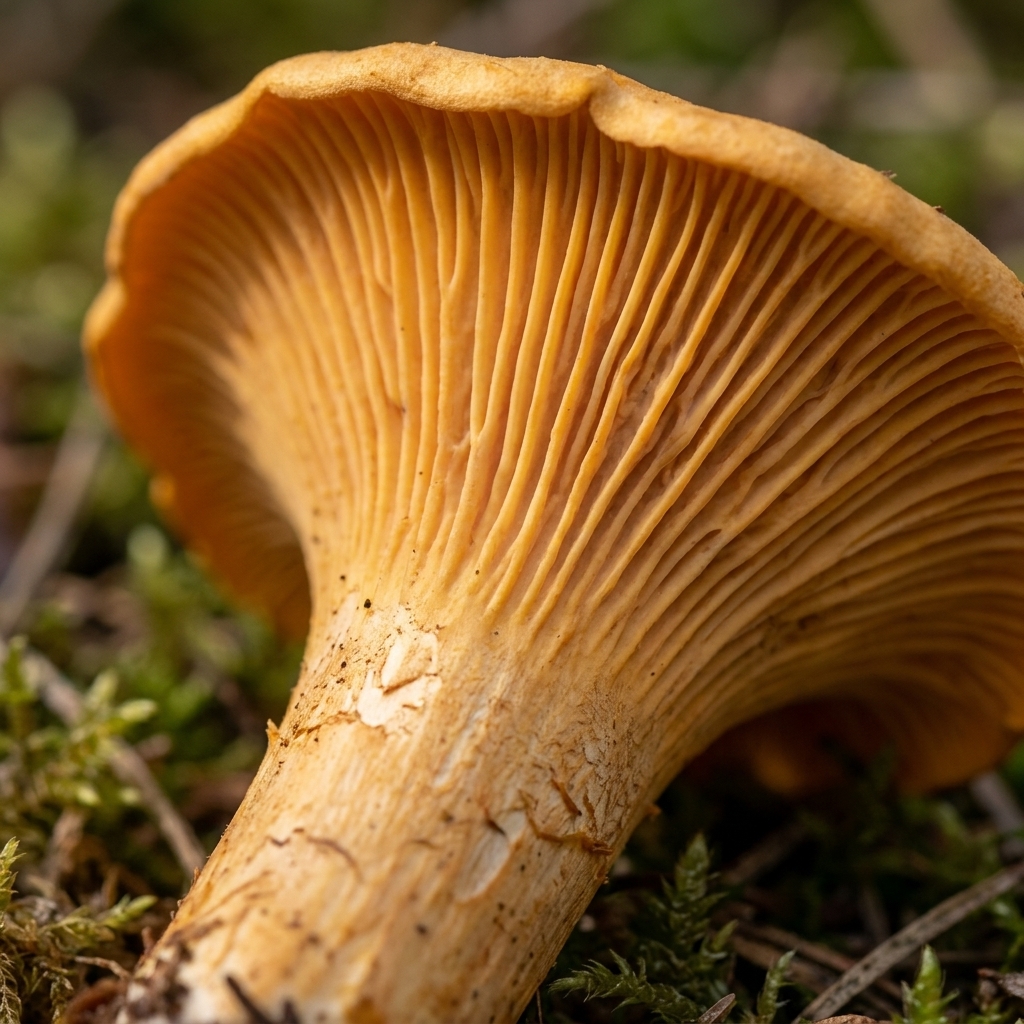
1) Chanterelles (Cantharellus species)
Why beginners love them: They are tasty, fragrant (often a light apricot scent), and have a shape that feels recognizable once you have seen a real one.
- Key features: wavy cap, solid flesh, and blunt ridges (not true, blade-like gills) that often fork and run down the stem.
- Habitat: on the ground in forests, often near hardwoods or conifers depending on region.
Look-alike to watch: Jack-o’-lantern (Omphalotus), which can cause serious gastrointestinal illness.
- Jack-o’-lantern typically has true gills that are thin and sharp, often grows in clusters on wood or from buried roots, and can be a brighter orange.
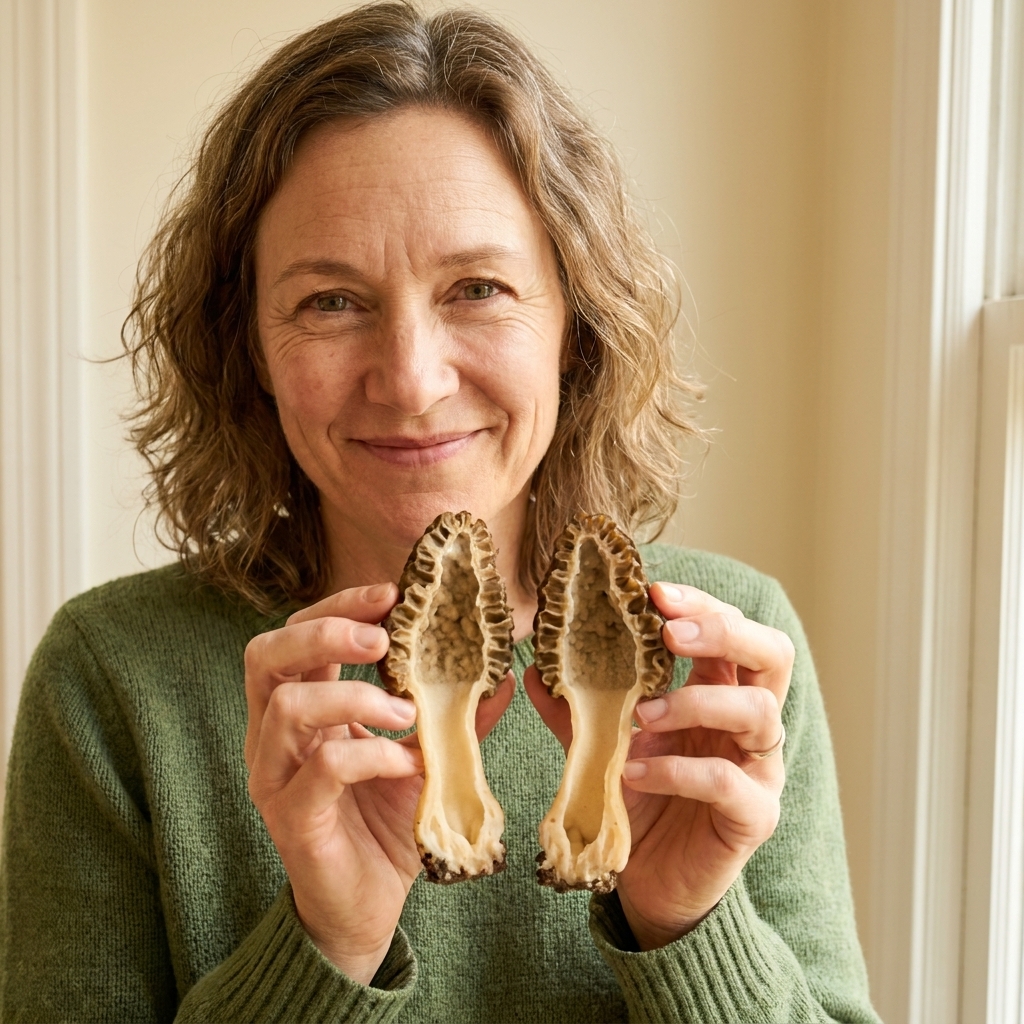
2) Morels (Morchella species)
Why beginners love them: Morel season feels like a holiday, and true morels are distinctive when you learn the basics.
- Key features: a honeycomb cap with pits and ridges, and a mushroom that is typically hollow from tip to base when sliced lengthwise.
- Habitat: springtime, often near certain trees (varies by region), sometimes after fires in western areas.
Look-alikes to watch: false morels (a few genera), which can be toxic and dangerous.
- False morels often have a wrinkled or lobed “brain-like” cap rather than neat pits, and the interior may be chambered or cottony instead of cleanly hollow.
Extra safety note: Morels should be cooked thoroughly. Some people get stomach upset from undercooked morels.
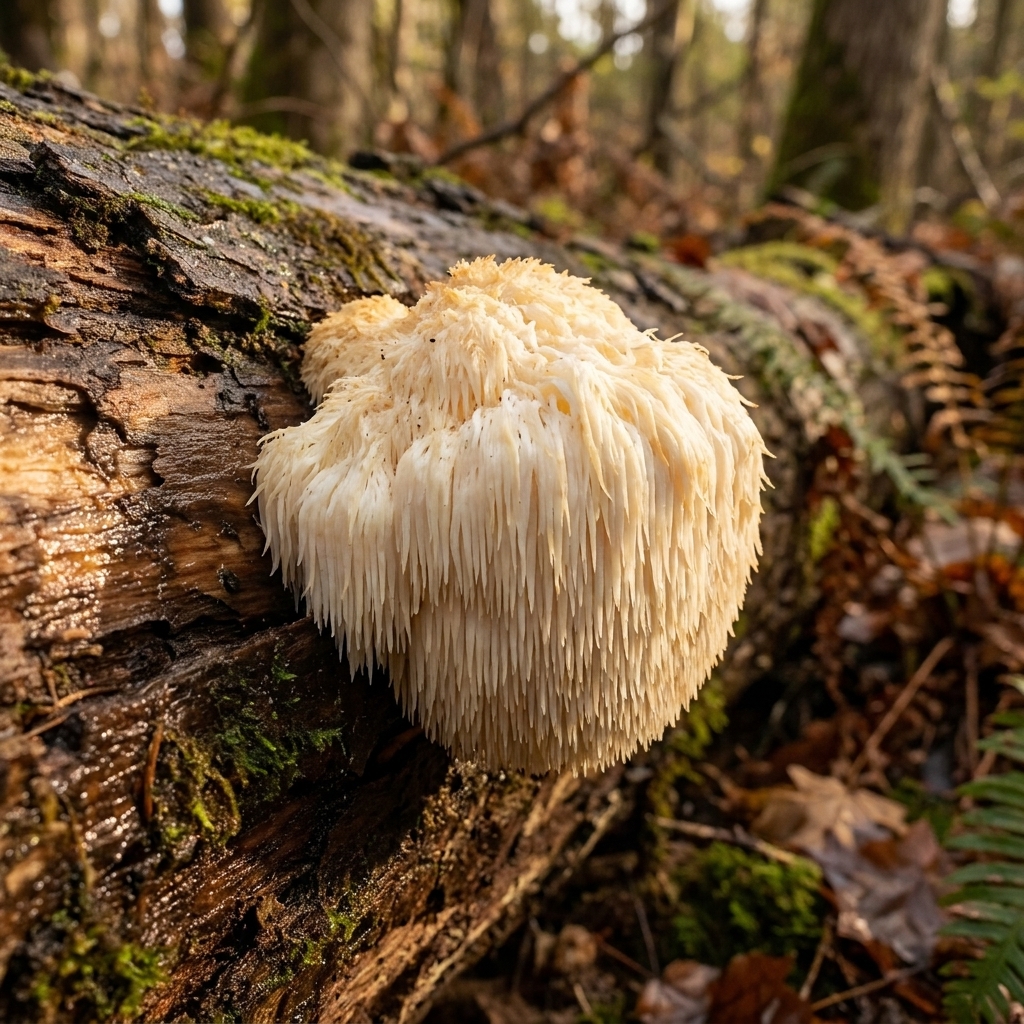
3) Lion’s mane (Hericium erinaceus) and other Hericium species
Why beginners love them: They look like a friendly white pom-pom and are hard to confuse once you know the “tooth” structure.
- Key features: white to cream, grows on wood, and has hanging spines instead of gills or pores.
- Habitat: on hardwoods, often beech, oak, maple, in many regions.
Look-alikes to watch: There are other toothed fungi, but Hericium is generally a beginner-friendly group. Still confirm your first finds, especially if it is older or discolored.
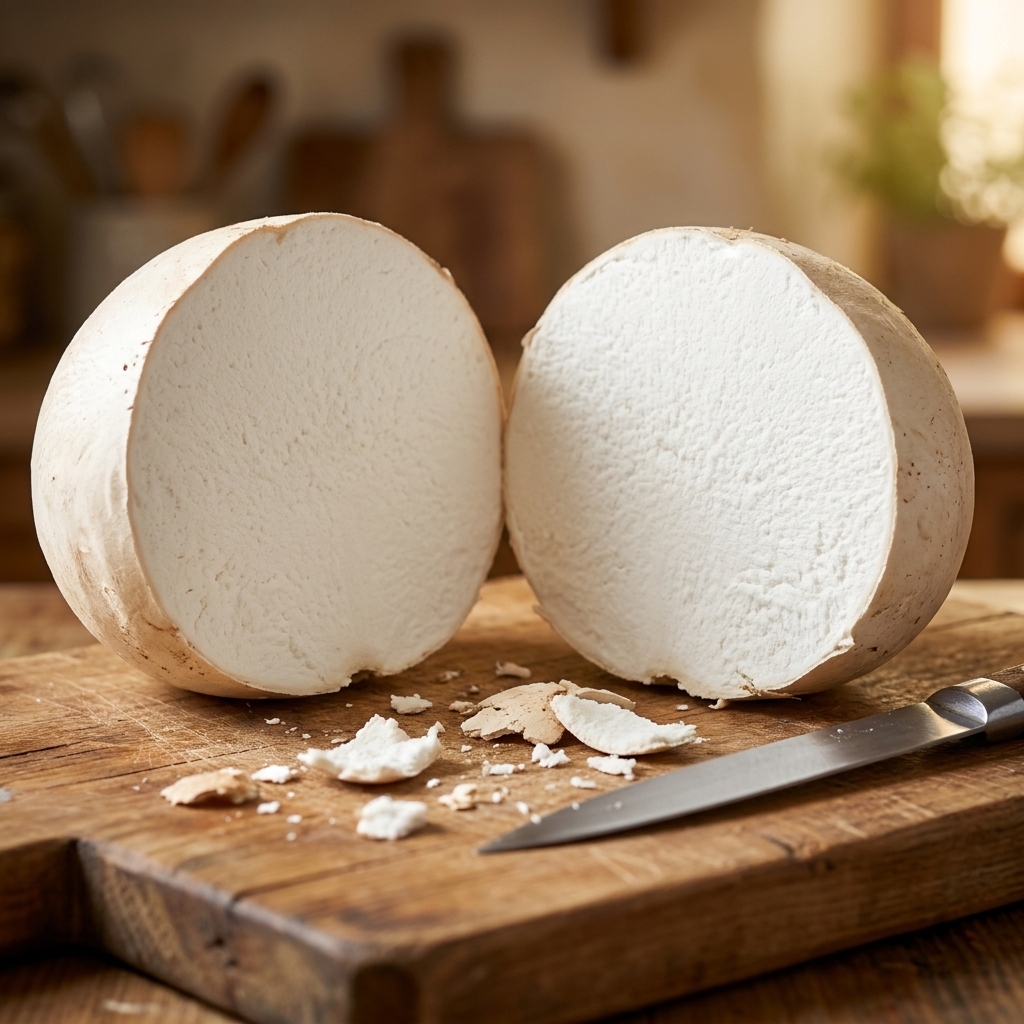
4) Giant puffball (Calvatia gigantea)
Why beginners love them: When they are right, they are unmistakable and can feed a crowd.
- Key features: a large white ball on the ground. The inside should be pure white and uniform, like fresh mozzarella.
- Habitat: fields, forest edges, open woods, sometimes lawns (avoid treated areas).
Look-alikes to watch: Young Amanita “egg” stage can resemble small puffballs and may be deadly.
- Safety step: Slice puffball-like mushrooms in half. If you see any outline of a cap and stem forming inside, do not eat it.
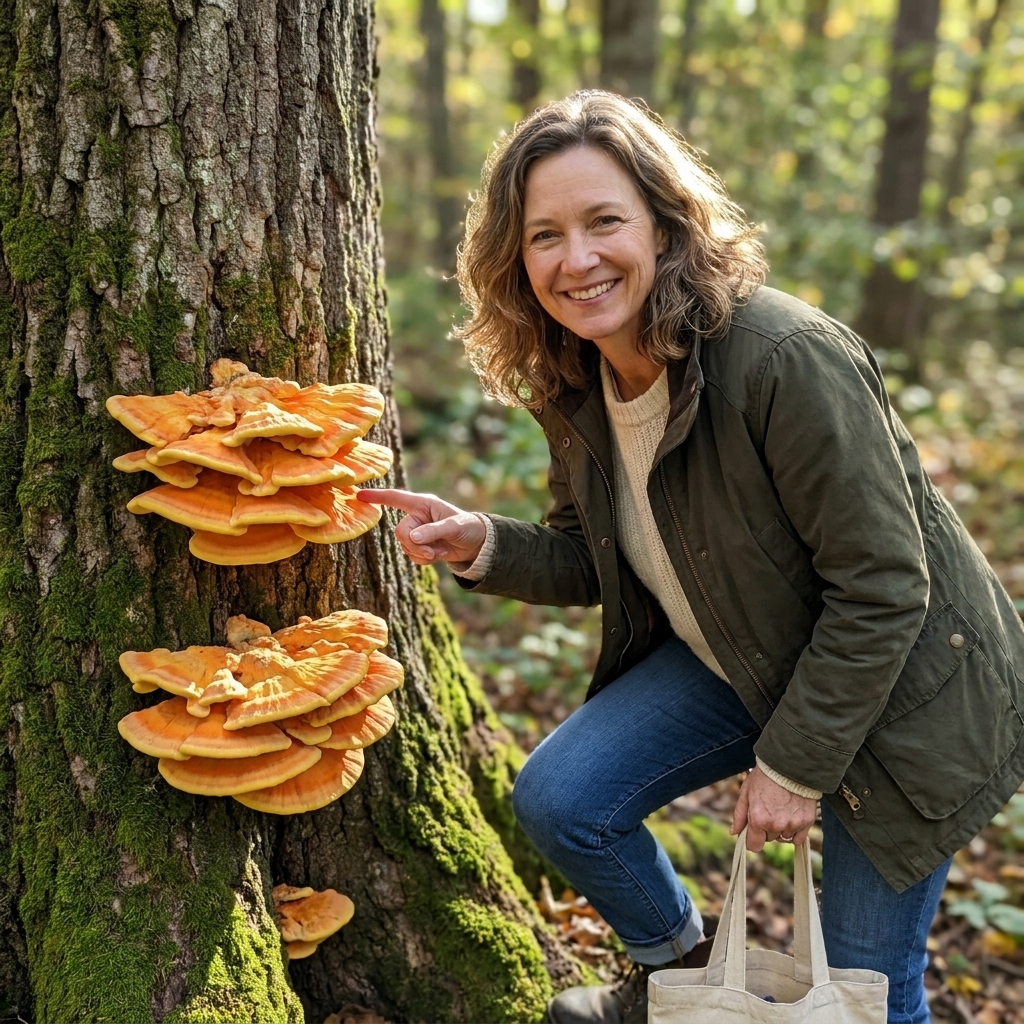
5) Chicken of the woods (Laetiporus species)
Why beginners love them: Bright, shelf-like clusters on trees, with a texture that can be delightfully “chicken-y” when cooked.
- Key features: overlapping shelves, orange and yellow tones, grows on wood.
- Habitat: on dead or living hardwoods, sometimes conifers depending on species.
Look-alikes to watch: Other bracket fungi can look similar at a glance, and older chicken of the woods gets tough and can cause stomach upset.
- Harvest young, tender edges and leave the woody base.
- Reaction note: Some foragers report sensitivity to chicken of the woods, sometimes associated with certain host trees or older specimens. Try a small portion first.
What to avoid eating
Some mushrooms are delicious but not worth the beginner stress. Put these in your “learning only” basket until you have mentorship.
- Little brown mushrooms: too many species, including dangerous ones.
- White gilled mushrooms: includes deadly Amanitas in North America.
- Anything you cannot identify to species with confidence: “It looks like” is not an ID.
- Any mushroom from contaminated areas: roadsides, industrial sites, treated lawns, railways.
Beginner foraging win: coming home with great photos, clean notes, and zero meals. That is called “building your future certainty.”
Big toxic look-alikes
Amatoxin Amanitas
Some Amanitas contain amatoxins, and these species cause many of the fatal mushroom poisonings worldwide.
- Common traits: white spores, often white gills, frequently a ring on the stem, and a volva or bulb at the base.
- Beginner habit: always uncover the base of the stem. Do not cut it off in the ground and guess.
Galerina
Some Galerina species contain amatoxins (the same toxin class as deadly Amanitas).
- Risk scenario: confusing them with edible mushrooms that grow on wood.
- Beginner rule: if it is small, brownish, and growing on wood, treat it like a “do not eat” until you have expert confirmation.
False morels
Morel hunting is exciting, and excitement is not always the best identification tool.
- Beginner rule: only eat morels you can confirm as true morels, and slice lengthwise to check the interior.
From forest to pan
In the field
- Keep different finds separated.
- Record the habitat and nearby trees. Mushrooms love patterns.
- Harvest only what you can process the same day.
At home
- ID again in good light. Compare to your guide, your photos, and your notes.
- Clean gently. Brush dirt away. Rinse briefly only if needed, then dry promptly.
- Cook thoroughly. Many wild mushrooms are best cooked, and some should never be eaten raw.
- Start small. Try a small serving the first time you eat any new species.
Storage
- Refrigerate in a paper bag or a container with airflow.
- Use within a few days.
- Many mushrooms can be sautéed and frozen, or dehydrated depending on species.
Find community
One of the safest shortcuts is also the most fun: learn with others. You will learn faster, and you will build real confidence.
- Mycological societies: Many regions have clubs that host guided walks and ID tables.
- Nature centers and extension programs: Some offer seasonal workshops.
- Online ID groups: Useful for learning, but treat them as education, not instant permission to eat. Post multiple angles, include habitat, and wait for consensus from experienced identifiers.
Quick ID checklist
- Did I photograph it in habitat and from multiple angles?
- Do I know whether the underside has gills, pores, teeth, or ridges?
- Did I look at the base of the stem for a volva or bulb?
- Do I know what it was growing on (soil, wood, buried roots)?
- Did I note smell, staining, and other changes after handling?
- Do I have a match in a regional guide plus confirmation from a trusted source?
- Is it fresh and in good condition?
- Am I still excited, or am I certain? Only certainty gets invited to dinner.
FAQ
Is touching toxic mushrooms dangerous?
For most species, touching is not dangerous, but it can irritate sensitive skin. The real danger is ingestion. Wash your hands after handling mushrooms, and avoid touching your eyes or mouth until you do. Keep mushrooms away from pets and small children.
Can I cook a poisonous mushroom to make it safe?
No. Some toxins survive cooking, drying, and freezing. Cooking helps with digestibility for many edible species, but it does not detox deadly mushrooms.
What is the safest mushroom for beginners to eat?
Many foragers start with lion’s mane or giant puffball because the key features are distinctive, but “safest” still depends on correct identification and local look-alikes. Your safest first step is a guided walk with a local club.
Where should I avoid foraging?
Avoid roadsides, industrial zones, treated lawns, and areas that may have pesticides or heavy metals. Mushrooms can accumulate contaminants from their environment.
Do mushrooms regrow if I pick them?
The visible mushroom is the fruiting body. The main organism is a network in the soil or wood (mycelium). Careful harvesting usually does not harm it, but trampling and habitat damage can.
Final nudge
If you take nothing else from this guide, take this: foraging is a practice, not a test. Your job is to build a relationship with the woods, learn a few species deeply, and let your “no thanks” muscles get strong.
Start with one beginner species at a time, take great photos, and celebrate the days you come home with clean shoes and a head full of new observations. The mushrooms will be waiting when you are ready.