

Indoor bonsai sounds like a tiny, serene houseplant situation. And sometimes it is. Other times it is you, holding a watering can, whispering, “Please do not die, I just met you.”
The good news is that most beginner losses are not mysterious. They come from a few predictable issues: too little light, inconsistent watering, and repotting at the wrong time. Let’s keep this simple, keep it indoors, and focus on one goal for the first few months: a healthy, stable little tree.
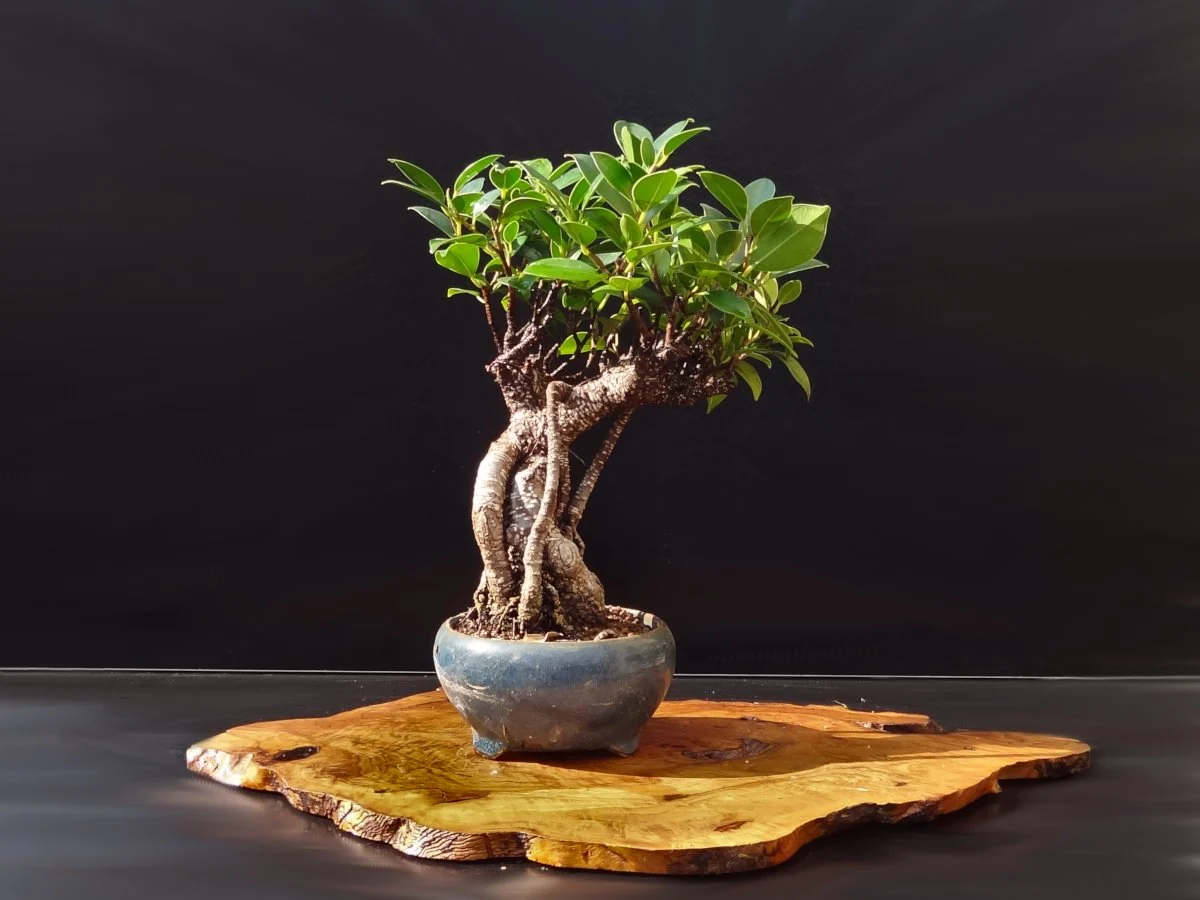
What “indoor bonsai” means
Most classic bonsai species are outdoor trees that need winter chill and full sun. When they live indoors year-round, they slowly weaken, then protest by dropping leaves.
“Indoor bonsai” usually means tropical or subtropical species that can live inside as long as they get enough light and steady warmth. Think of them more like a high-light houseplant that you prune like a tiny tree.
Two quick rules
- Light is the whole game. Indoors is always dimmer than it feels. A bright window is great. A grow light is often even better.
- Bonsai pots dry fast. Shallow soil plus airflow equals quicker drying than normal houseplants.
Choosing your first tree
If you want the easiest first win, choose a species that forgives beginner watering and indoor conditions.
Best beginner indoor species
- Ficus microcarpa (often sold as “ficus retusa”): My top pick. Tough, flexible, tolerates indoor air, bounces back from beginner mistakes.
- Chinese elm (Ulmus parvifolia): Can do well indoors in bright light, but is happiest with a cooler winter rest. Still beginner-friendly if you can give it strong light.
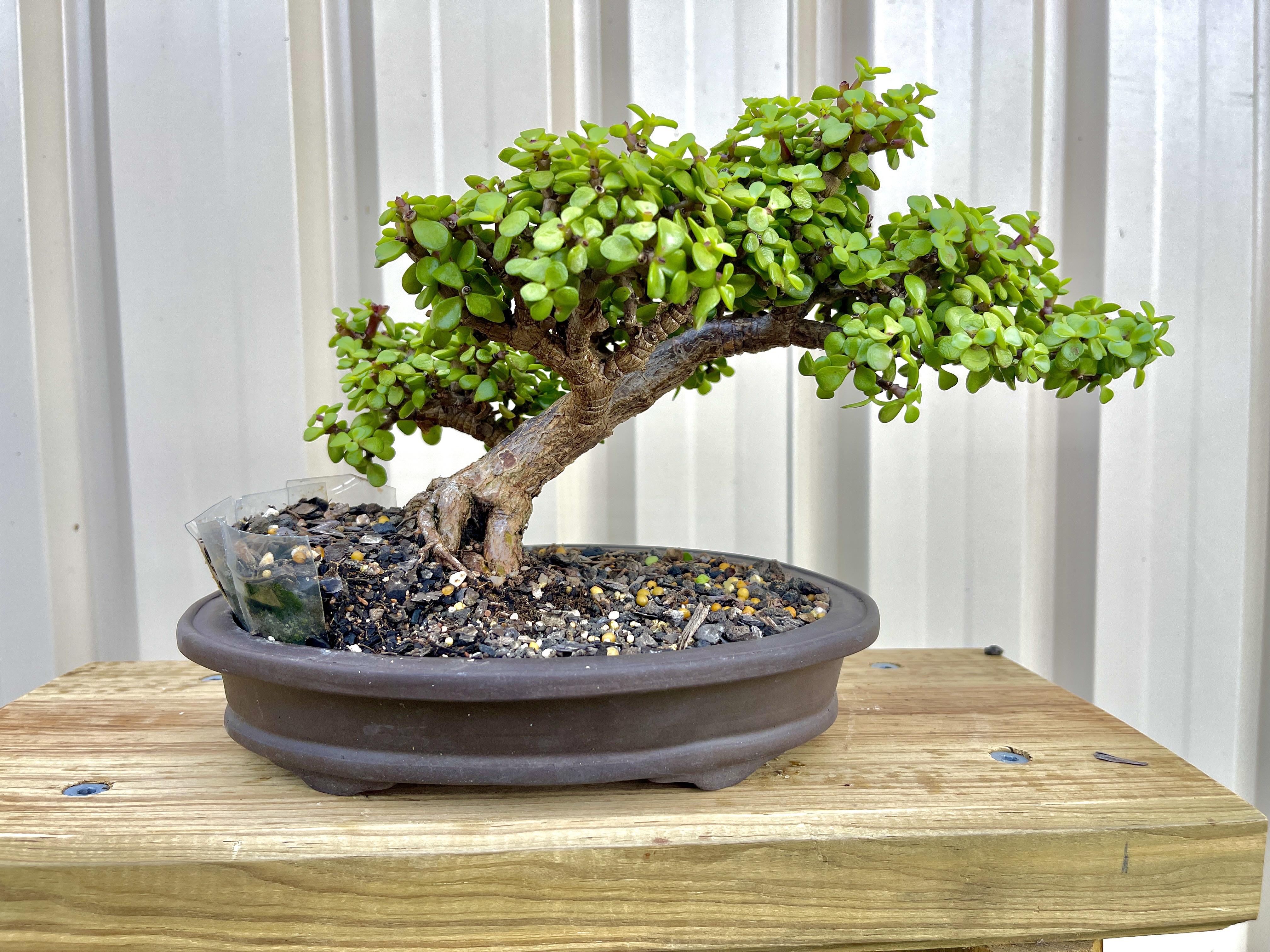
- Dwarf jade (Portulacaria afra): A succulent that can be trained like bonsai. Very forgiving, especially if you tend to overwater out of anxiety.
- Brazilian rain tree (Chloroleucon tortum): Lovely and responsive, but wants strong light and can sulk if conditions swing wildly.
What to avoid indoors
- Juniper: Often sold as “indoor bonsai,” but it is an outdoor conifer. Indoors it usually declines.
- Anything with glued rocks or moss: If the surface is sealed up, watering becomes guesswork and roots stay too wet.
- Very weak or heavily styled trees: Dramatic bends and tiny pots are gorgeous, but beginners do better starting with vigor.
How to pick a healthy bonsai
- Leaves should look mostly clean and lively, not dull or crispy.
- Check for pests: look under leaves and along stems for fine webbing (mites), cottony clusters (mealybugs), immobile bumps (scale), or sticky honeydew (often from scale, aphids, or mealybugs).
- Gently wiggle the trunk. It should feel anchored, not loose in the soil.
- Peek at drainage holes. Roots circling out the bottom means a repot is coming, but it is not a dealbreaker if the tree looks strong.
The beginner tool kit
You do not need a full samurai roll of specialty tools to keep a bonsai alive. Start with the basics, then upgrade once you are sure you enjoy the hobby.
Must-haves
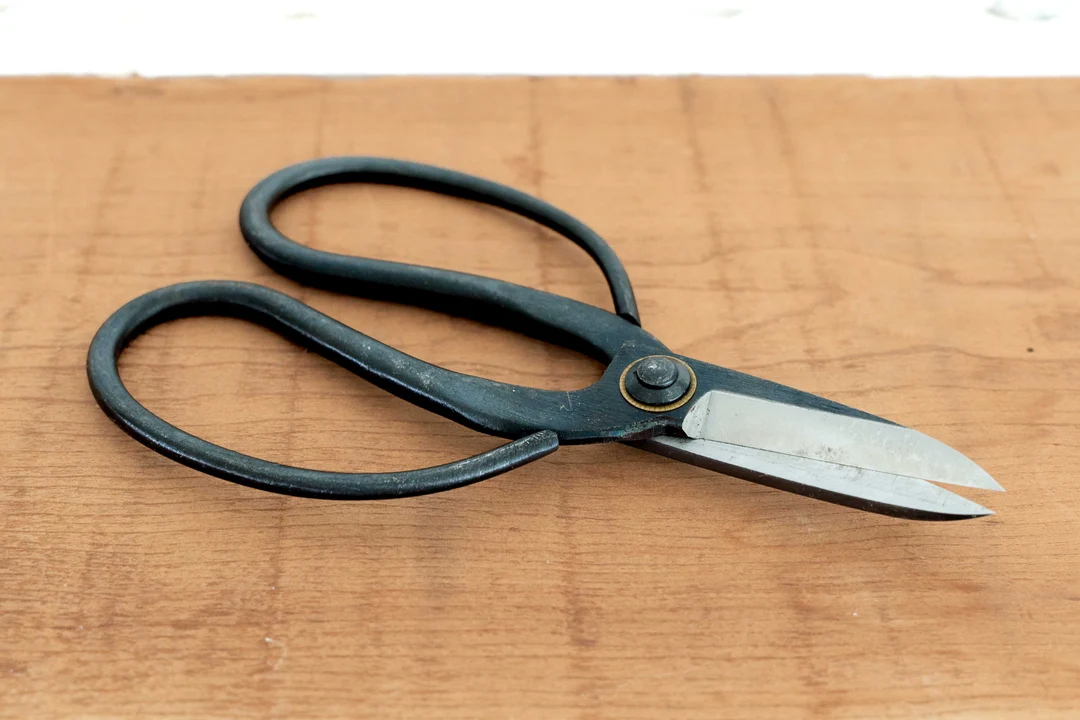
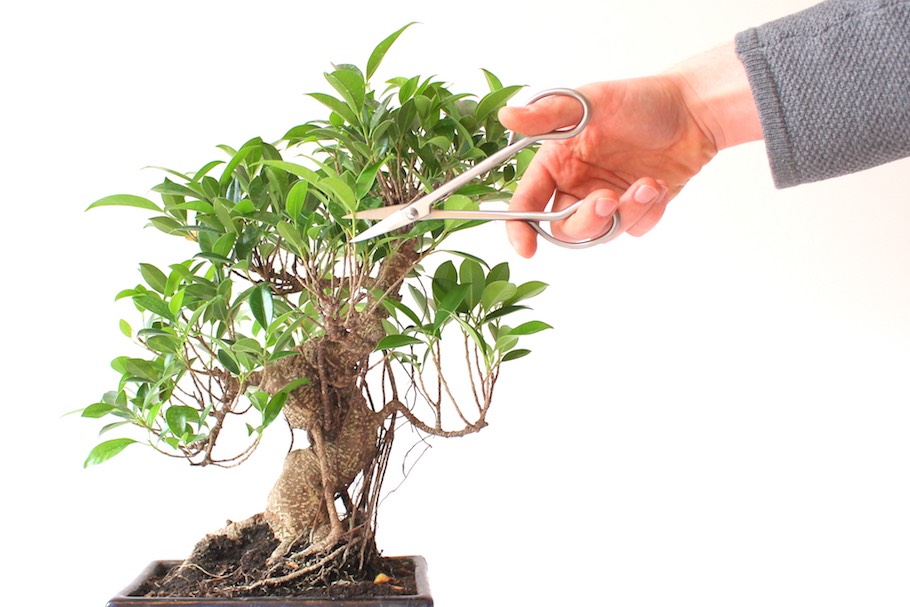
- Small pruning scissors: Clean cuts matter. Regular kitchen scissors tend to crush stems.
- Chopstick or bamboo skewer: For checking moisture and gently working soil during watering or repotting.
- Watering method you will actually use: A small watering can with a narrow spout, or a squeeze bottle for control.
- A simple tray: Not for soaking. It is for catching drips and protecting your sill or table.
Nice-to-haves
- Concave cutter: Helpful for thicker branches, but you can wait.
- Wire and wire cutters: Styling can come later. Survival first.
- Grow light: If you do not have a truly bright window, this becomes a must-have.
Setting up the spot
Try to keep your bonsai in one consistent location. Moving it from one microclimate to another is like making it relearn the rules every week.
Light
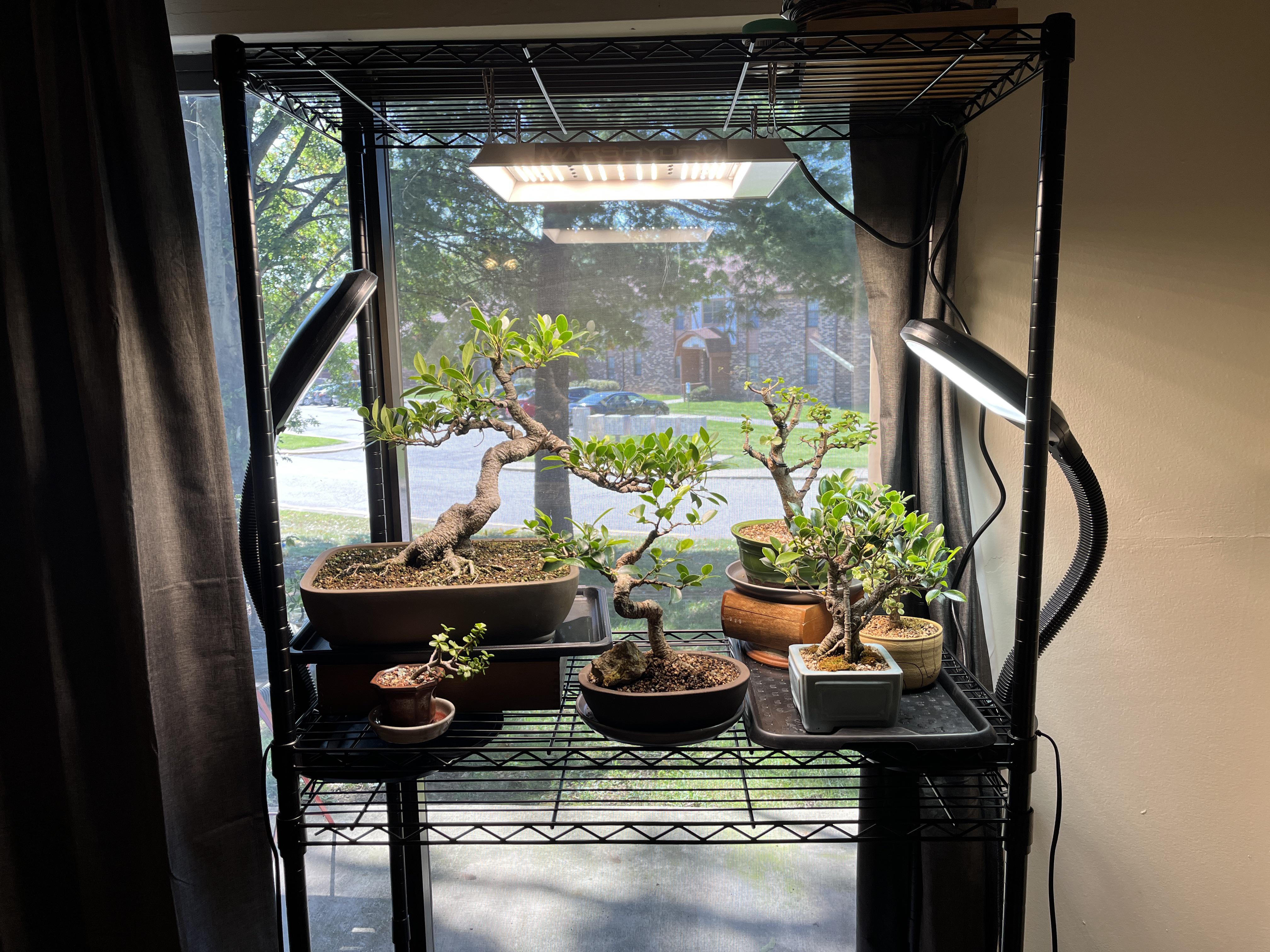
- Best window: South-facing is usually strongest in the Northern Hemisphere. East-facing can work well for ficus and jade. North-facing is usually too dim without a grow light.
- Watch for scorch: Bright is good. Hot midday sun through glass can still crisp leaves on some trees. If you see bleaching or crispy patches, pull it back from the window a little or use a sheer curtain.
- Rotate weekly: Give the pot a quarter turn once a week so growth stays even.
- Grow light option: Use a full-spectrum LED grow light and follow the manufacturer’s distance guidance if you have it. As a general starting point, many setups land somewhere around 8 to 18 inches away for 10 to 14 hours a day, then you adjust based on how the tree responds.
Temperature and airflow
- Aim for typical indoor comfort: roughly 65 to 80°F for tropical species.
- Keep it away from heating vents, radiators, and blasting AC. The soil dries too fast and leaves can crisp.
- Some airflow is good, but avoid a constant draft.
Humidity
Don’t panic-buy a humidifier unless you already want one. Many ficus do fine in normal home humidity if light and watering are solid. If your air is very dry, set the pot on a tray with pebbles and water in the tray below the pot, so the roots are not sitting in water.
Also worth knowing: pebble trays are usually a modest help in typical rooms, not a magic climate machine. Consider them a small assist, not the main strategy.
Watering
Here is the bonsai watering truth I wish someone had taped to my forehead: you do not water on a schedule. You water based on the soil.
The finger-and-skewer method
- Touch the top of the soil. If it is obviously wet, wait.
- Insert a wooden skewer or chopstick about an inch down.
- Pull it out. If it comes out damp with dark soil stuck to it, wait. If it is barely damp or dry, water.
How to water correctly
- Take the bonsai to a sink or tub.
- Water slowly until water runs out the drainage holes.
- Wait 30 to 60 seconds.
- Water again. This second pass helps rehydrate dry pockets.
- Let it drain thoroughly before returning it to its tray.
Soil changes everything
Watering advice depends on the substrate. Many store-bought bonsai are in peat-heavy soil that holds water longer and can stay swampy indoors, especially in low light. A fast-draining bonsai mix behaves differently: it drains quickly, but you may water more often. Same tree, totally different rhythm.
Common pitfalls
- Misting instead of watering: Misting does not replace root watering. It can also encourage fungus if air is stagnant.
- Leaving the pot in standing water: Bonsai roots need oxygen. Constantly soggy soil suffocates them.
- Letting it bone-dry repeatedly: Some species bounce back, but repeated drought stresses the tree and causes leaf drop.
Beginner goal: keep the soil in the “evenly moist, then slightly dry, then water” rhythm. Not swampy. Not desert.
Your first 90 days
If you want low-friction, this is the routine I recommend. It builds consistency without turning your hobby into a daily stress audit.
Daily
- Glance at the leaves. Sudden drooping, curling, or mass yellowing means something changed.
- Check moisture with a finger or skewer if the surface looks dry.
Weekly
- Rotate the pot a quarter turn for even light.
- Inspect for pests under leaves and at branch joints.
- Wipe dust off leaves gently with a damp cloth (especially ficus).
Monthly
- Lightly prune fast, leggy shoots on vigorous species like ficus to keep shape.
- Check whether the tree is drinking faster than usual. Seasonal shifts can change watering needs quickly.
Pests: what to do
Finding pests is not a moral failure. It is an indoor plant rite of passage. The trick is acting early, while you are still saying “huh, that’s weird” instead of “why is my bonsai crunchy.”
A simple response plan
- Isolate the tree from other plants.
- Rinse the canopy and undersides of leaves with a gentle shower or spray in the sink. This alone can knock back mites and aphids.
- Treat with insecticidal soap or horticultural oil, following the label. Cover undersides of leaves and stems.
- Repeat every 5 to 7 days for a few rounds. Eggs hatch. Pests come back if you only do one treatment.
- Recheck weekly even after it looks clean.
If you see scale, those bumps can be stubborn. You can gently scrape them off with a fingernail or cotton swab, then treat and repeat. With mealybugs, remove the fluffy clusters, then treat.
Pruning basics
Pruning is where bonsai starts to feel like bonsai. But in the beginning, pruning is also where people accidentally remove the tree’s ability to feed itself.
Two types of pruning
- Maintenance pruning: Snipping back new growth to keep the silhouette tidy.
- Structural pruning: Removing branches to change the design. Save this for when the tree is thriving and you feel confident.
A beginner-friendly approach
- Wait until your tree is actively growing (usually spring through summer indoors, depending on light).
- Identify the long shoots that stick out beyond the shape.
- Cut back to 2 to 4 leaves on ficus, or to a pair of leaves on many broadleaf species.
- Step back and stop early. You can always cut more next week.
Mistakes to avoid
- Major pruning right after you bring it home: Let it acclimate for a few weeks first.
- Removing too many leaves at once: Leaves are solar panels. Fewer panels means less energy to recover.
- Cutting with dull scissors: Use sharp scissors and make clean cuts.
Fertilizer
Fertilizer helps, but it is not a rescue potion. If your tree is struggling due to low light or poor watering, fertilizer can make things worse.
Beginner rules
- Feed only when the tree is actively growing and looks stable.
- Use a balanced fertilizer (for example, something labeled for houseplants) at half strength.
- A simple rhythm: every 2 to 4 weeks in spring and summer, then reduce in fall and winter if growth slows.
If your bonsai recently dropped leaves, was repotted, or you just brought it home, wait until you see healthy new growth before feeding.
Repotting indoors
Repotting is important, but it is also one of the fastest ways to stress a new tree if the timing is off.
When to avoid it
- Right after purchase, unless the soil is truly awful (rock-hard, hydrophobic, or staying swampy for days).
- In the dead of winter in a dim home, when growth is slow.
- When the tree is already weak, dropping leaves, or fighting pests.
Signs it might be time
- Water runs straight through and the soil won’t absorb.
- The tree dries out extremely fast, sometimes within a day.
- Roots are densely circling and pushing up the tree or filling the pot.
Beginner-friendly tips
- Use a bonsai soil mix appropriate for your species. For many indoor tropicals, a fast-draining mix helps prevent soggy roots.
- Do not over-prune roots your first time. Conservative is smart.
- After repotting, protect from harsh midday sun for a week, and keep watering attentive but not excessive.
Mistakes that take out most trees
If you only read one section, make it this one.
- Not enough light: The tree slowly declines. Solution: move to a brighter window or add a grow light.
- Watering on a schedule: Leads to overwatering in winter and underwatering in summer. Solution: water when the soil tells you.
- No drainage: Decorative cachepots without drainage holes trap water. Solution: always use a pot with drainage, or keep the bonsai in its pot and set it inside a decorative outer pot only when fully drained.
- Repotting too soon: A stressed tree cannot recover easily. Solution: let it stabilize first.
- Over-pruning: Leaves are energy. Solution: prune gradually, especially your first season.
- Ignoring pests until it is a crisis: Indoors, pests spread fast. Solution: quick weekly checks and early treatment.
Quick troubleshooting
Leaves dropping suddenly
Often caused by a change in light, temperature, or watering. Ficus especially can drop leaves after being moved. Keep conditions steady, increase light, and avoid overwatering while it regrows.
Yellow leaves
Common causes include overwatering, low light, or natural leaf turnover. Check soil moisture first. If the soil stays wet for days, you likely need more light and better drainage.
Crispy leaf edges
Usually underwatering, hot drafts, or very dry air. Confirm with the skewer test, then adjust location away from vents.
White crust on soil
Often mineral buildup from tap water and fertilizer. Flush the soil occasionally by watering thoroughly, and consider using filtered water if your tap water is very hard.
FAQ
Can a bonsai live indoors year-round?
Some can. Tropical species like ficus and dwarf jade can live indoors year-round with strong light. Many traditional bonsai species are outdoor trees and do best outside.
How often should I water an indoor bonsai?
There is no reliable number. Check the soil and water when the root zone is starting to dry. In bright summer conditions that might be often. In winter it may be much less.
Do I need a humidity tray?
Not always. If your indoor air is very dry, a pebble tray can help a little, but the effect is usually modest. Light and correct watering matter more. Never let the pot sit in water.
Should I wire my bonsai as a beginner?
You can, but you do not have to. If you do wire, aluminum wire is usually easier for beginners than copper. Check it at least weekly. Wire can bite into bark quickly on fast-growing trees like ficus. It is completely fine to focus on health and gentle pruning first.
A calm first-month checklist
- Place your bonsai in the brightest safe spot you have, and keep it there as consistently as you can.
- Learn the soil moisture rhythm with the skewer method.
- Rotate weekly and do quick pest checks.
- Skip repotting and heavy styling until you see steady new growth.
- When in doubt, change one thing at a time and give it a week to respond.
If you keep your indoor bonsai alive through the first few months, you have already done the hardest part. After that, shaping and refinement feel less like panic and more like play, which is exactly what a hobby should be.