

There is a special kind of panic that hits when you lift the lid on your sourdough starter and think, Oh no, that is not the cozy, bready smell I remember. Take a breath. Starters are living little ecosystems, and they go through phases. Most “off” smells are fixable with a few days of simple, consistent care.
This guide will help you figure out what you are smelling, what it usually means, and exactly what to do next. No shame, no perfection required. Just a calm plan.
Quick diagnosis: what does it smell like?
Starters can smell surprisingly dramatic. Here is the short version of what the most common odors usually point to.
- Sharp vinegar or nail polish remover: most often a hungry starter that has gotten overly acidic, usually from infrequent feedings or warm temps.
- Very sour (old yogurt) or funky (gym socks): can happen during early days, after refrigeration, or when the balance of microbes shifts.
- Alcohol or beer, with grayish liquid on top: hooch, meaning the starter ran out of food.
- Cheesy, putrid, or truly rotten: may be contamination or severe neglect. Proceed carefully and consider restarting.
- Musty with visible fuzzy growth: mold. Do not salvage.
Smell is a clue, not a verdict. Pair it with what you see and how the starter behaves after a feeding.
Early starter weirdness (totally normal)
If your starter is new, a little chaos is part of the process. Many starters smell extra funky around days 2 to 4 as early bacteria bloom. Then there is often a quiet lull where it seems “dead.” After that, the more stable yeast and lactic acid bacteria community starts to take over and the smell usually turns cleaner and more pleasantly tangy.
If there is no mold or strange colors, and it improves with regular feedings, you are usually on track.
Hooch: the gray or brown liquid on top
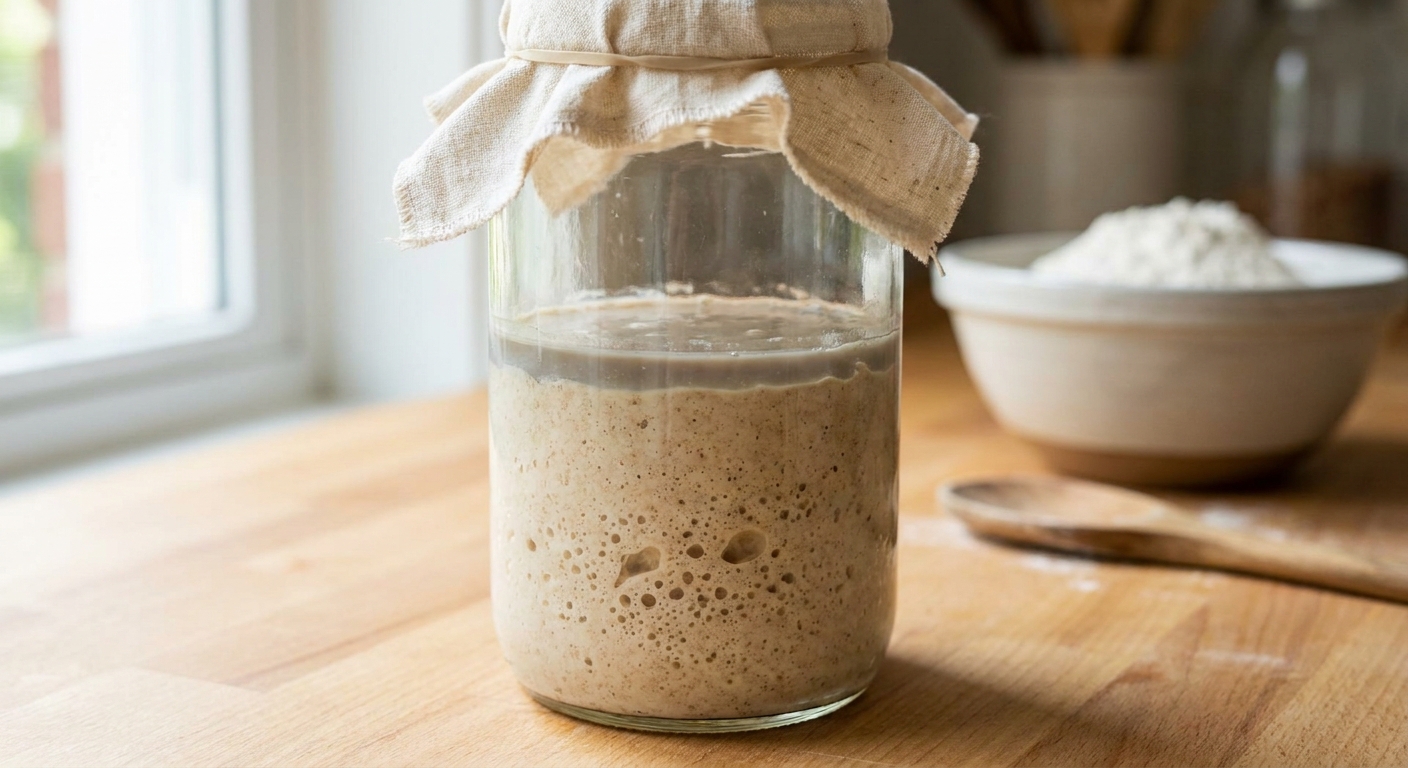
If you see a layer of liquid on top, sometimes gray, tan, or even dark brown, that is hooch. It is a byproduct of fermentation and a big sign your starter is hungry.
Is hooch bad?
Usually, no. Hooch looks unappetizing but it typically is not dangerous on its own in an otherwise normal, mold-free starter. If you also see fuzzy growth, unusual colors (especially pink or orange), or get a putrid odor, discard and restart.
What to do
- Option A (milder flavor): pour off the hooch, then feed.
- Option B (more tang): stir it back in, then feed.
Then move into the recovery plan below for a couple of days so your starter is not constantly hitting empty.
“My starter smells like vinegar” (or nail polish remover)
That sharp, eye-watering smell is most often a sign of a starter that is too acidic and underfed. A little tang is normal. A vinegar punch that makes you lean back is your starter asking for regular meals.
Common causes
- Not feeding often enough for your room temperature
- Keeping it very warm (on top of the fridge, near a sunny window, etc.)
- Using a very small feed ratio, like 1:1:1, when the starter is already acidic
- Leaving it at its peak for a long time without feeding again
How to fix it
Feed it a little bigger and a little more often for a few days. I like a 1:3:3 or 1:5:5 ratio (starter:water:flour by weight) until the smell softens and the rise improves.
If your schedule only allows one feeding a day at room temp, use a higher ratio like 1:5:5 so the starter has more food to work through.
“My starter smells sour” (but not scary sour)
A healthy starter can smell like:
- tangy yogurt
- green apple
- beer or cider
- mild vinegar
- fresh flour with a fruity edge
Especially in the first 1 to 2 weeks of building a new starter, the smell can swing around as different microbes take turns thriving. That is normal beginner chaos.
When sour is okay
- No fuzzy growth or colored streaks
- It forms bubbles after feeding
- It rises at least somewhat and then falls
- It smells cleaner after a fresh feed
When sour needs intervention
If it is consistently harsh and the starter barely rises, treat it like an “overly acidic” starter and follow the recovery plan with a higher feed ratio.
Weak rise: it bubbles but will not double
This is one of the most common frustrations. You feed, you see bubbles, but the starter just sits there like a sleepy pancake.
Most common reasons
- Too cold: Fermentation often slows noticeably below about 70°F/21°C (depending on your starter, flour, and hydration).
- Too hungry: If you are feeding after it has collapsed and sat there for a long stretch, yeast can lose momentum. A practical fix is to feed closer to peak, or soon after it starts to fall, rather than letting it sit collapsed all day.
- Too wet or too dry: Extremely loose starters can look bubbly without trapping gas well.
- Flour choice: All-purpose flour works, but a little rye or whole wheat can boost activity.
- Chlorinated water: Often fine, but some starters are sensitive. Filtered water can help.
Quick ways to strengthen rise
- Feed by weight and aim for a thick, scoopable consistency, like very thick pancake batter.
- Try 10 to 30 percent whole rye or whole wheat for 2 to 3 feeds.
- Keep it warmer, like in an unheated oven with the light on (check that it does not get hot).
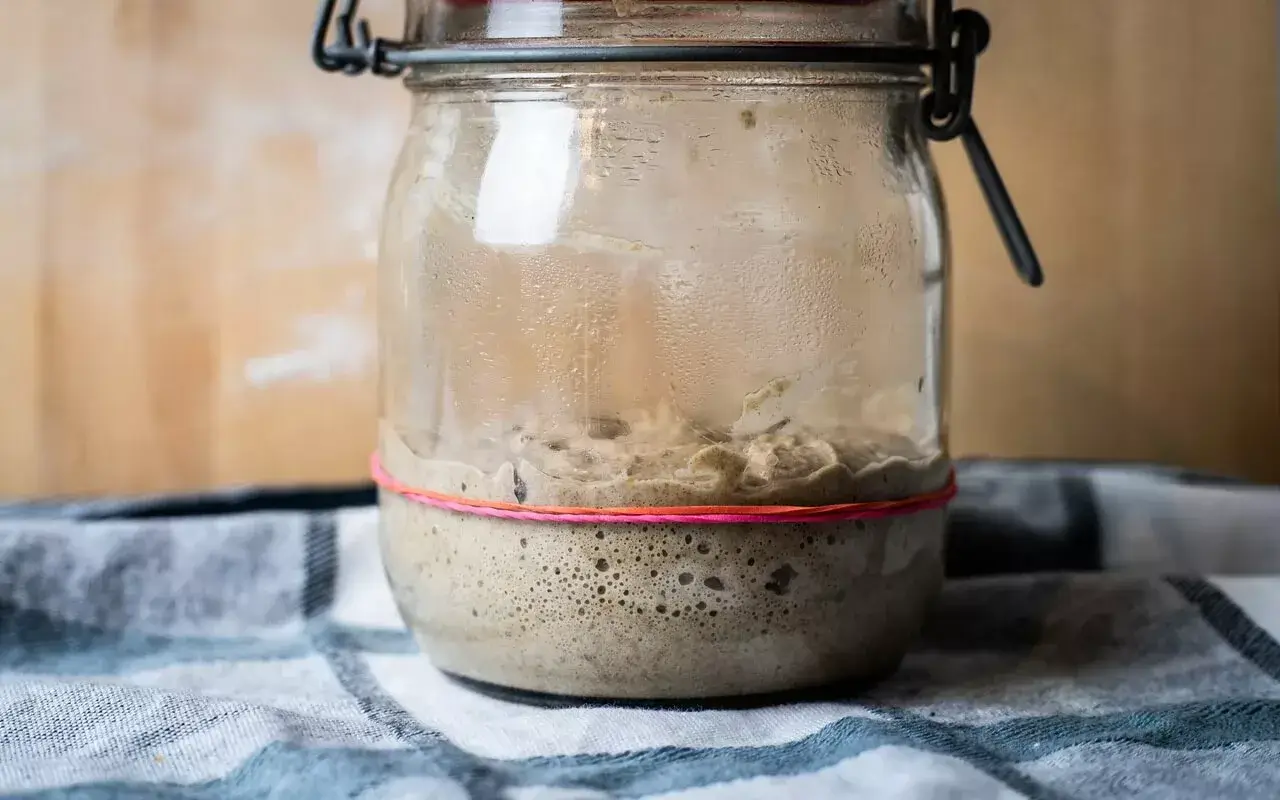
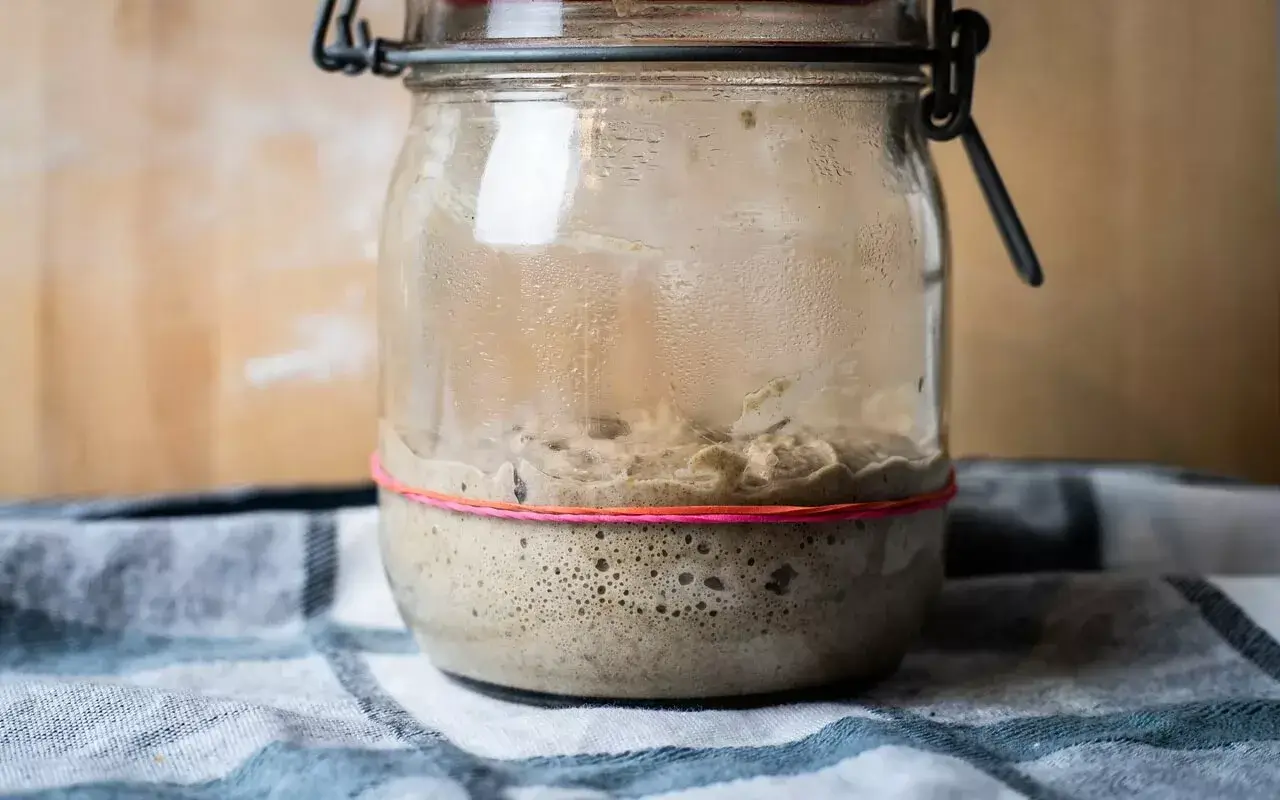
- Use a rubber band to mark the level right after feeding so you can actually see progress.
Also, a quick note: doubling is a helpful benchmark, not a moral requirement. Some whole-grain starters, looser hydrations, or wide jars rise differently. Look for a consistent rise and fall pattern, lots of bubbles throughout, and a clean, pleasantly tangy smell.
Mold concerns: when to toss it
I am very pro “save the starter,” but mold is where I draw a firm line. If you see mold, do not scrape it off and keep going. Mold can send invisible threads through soft foods and spreads more than what you can see on the surface.
Definitely toss and restart if you see
- Fuzzy growth of any color (white, green, blue, black)
- Pink or orange streaks or patches (can indicate unwanted bacterial growth)
- A truly rotten smell paired with unusual discoloration
What is not mold
- Hooch: smooth liquid layer, not fuzzy
- Dark crust: dried starter around the rim
- Gray tint: sometimes happens with neglect, especially if the top oxidizes
When in doubt, trust your eyes. Fuzz is a no.
Feeding habits that cause most “off” starters
As a former librarian, I want to hand you a little “choose your own adventure” bookmark here. Most starter issues come down to a few repeatable patterns.
1) Feeding by volume instead of weight
A cup of flour can vary wildly. Water does not. That mismatch can make your starter gradually too wet or too dry. A small kitchen scale makes starter care much more predictable.
2) Feeding too little, too rarely
If your starter regularly develops hooch or smells intensely acidic, it is running out of food. Either feed more often or increase your feed ratio.
3) Sealing the lid tight
Starters release gas. Use a loose lid or a jar lid set on top. You want airflow without inviting fruit flies to a party.
4) Using a dirty jar forever
Crusty buildup around the rim is not just messy. It can harbor unwanted microbes. Switching to a clean jar every few days makes a real difference.
Step-by-step recovery plan (3 days)
This is my go-to “bring it back to center” routine. It works for hungry starters, overly sour starters, post-fridge sluggishness, and most weak-rise situations.
Before you start
- Grab a clean jar.
- Use a scale if you have one.
- Aim for a warm-ish spot, ideally 72 to 78°F/22 to 26°C.
Day 1: Reset and feed bigger
- Transfer: Put 20 g starter into a clean jar. Discard the rest (or save discard if it smells clean and you like discard recipes).
- Feed: Add 60 g water and 60 g flour (this is 1:3:3).
- Mix well: Scrape down the sides.
- Mark the level: Rubber band or dry-erase marker on the outside of the jar.
- Cover loosely and let it rise.
If your starter has been extremely acidic or has strong solvent notes, go to 1:5:5 instead: 20 g starter + 100 g water + 100 g flour.
Day 2: Feed at the right time
Feed again when the starter is near its peak or just starting to fall. For many kitchens, that is 8 to 12 hours after feeding, but you do not need to treat the clock like your boss. Watch the starter.
- Keep 20 g starter.
- Feed 60 g water + 60 g flour (or 1:5:5 if needed).
- Keep it warm and loosely covered.
Day 3: Confirm it is back
You are looking for:
- noticeable rise, ideally close to doubling in a predictable window (but see note above on flour, hydration, and jar shape)
- lots of bubbles throughout, not just on top
- a smell that is tangy but not harsh, like yogurt, fruit, or mild cider
If it is improving but not quite there, keep the same routine for 2 more days. Starters respond beautifully to boring consistency.
What if it still smells wrong?
If it smells putrid or like garbage
If the odor is truly rotten and does not improve after one or two refreshes, I would restart. It is not worth forcing a questionable culture back to life, and new starters are easier than they seem once you have done it once.
If it smells like acetone even after feeding
Increase the feed ratio (1:5:5) and make sure it is not living in a very warm spot. Also check that you are not keeping too tiny an amount of starter with too little flour, which can acidify quickly.
If it smells okay, but still will not rise
Try one of these gentle boosts:
- Swap 20 percent of your flour for rye for two feedings.
- Make it slightly thicker by reducing water a little.
- Warm it up.
Extra caution checklist
When it comes to starters, most problems are fixable. Still, I would be extra cautious and choose “discard and restart” if any of these apply:
- Anyone in your household is immunocompromised, and the starter has any suspicious signs.
- You see fuzzy growth, or pink or orange patches.
- The smell is persistently putrid, and refreshes do not improve it.
- You are unsure whether what you are seeing is mold. When in doubt, toss.
Keeping it happy: a simple maintenance routine
Once your starter is back to smelling pleasantly tangy and rising reliably, you have options. The “best” routine is the one you will actually do.
If you bake often (every day or two)
- Keep it at room temp.
- Feed daily or twice daily depending on warmth.
- Use 1:3:3 or 1:5:5 as needed.
If you bake weekly
- Store in the fridge.
- Feed once a week, or the day before baking.
- To bake: give it 1 to 2 room-temp feeds until it rises strongly again.
Jar hygiene (the unglamorous hero)
Switch to a clean jar every few days, wipe the rim, and avoid leaving a thick ring of dried starter above the surface. This is a tiny habit that prevents a lot of “what is that smell?” moments.
FAQ
Can I bake with a starter that smells a little sour?
Yes. Sourdough is supposed to be sour-ish. If there is no mold, no rotten smell, and it is rising reliably after feeding, you are usually good to bake.
Is hooch a sign my starter is dead?
No. Hooch is a sign it is hungry. Feed it and it will often bounce back quickly.
Do I have to throw away discard?
No, as long as it smells clean and normal (tangy, yeasty, mildly sour). If anything smells rotten or looks suspicious, skip saving discard and focus on safety.
What is the best flour for reviving a sluggish starter?
A blend works great. Use your normal flour plus 10 to 30 percent whole rye or whole wheat for a couple of feeds. Then you can return to all-purpose or bread flour once it is strong.
My starter smells like feet. Is that normal?
It can happen, especially early on or after a long fridge nap. If it improves after feeding and there is no mold, it is usually just a temporary funk. The recovery plan above is made for this exact moment.
If you only take one thing from this page, let it be this: a sourdough starter is not a fragile pet. It is more like a houseplant. Miss a watering, tidy it up, feed it, and it usually forgives you.