
There is something delightfully old-fashioned about blending your own herbal tea. It feels like the gentlest kind of kitchen magic: a handful of leaves, a pinch of flowers, a twist of citrus peel, and suddenly you have a mug that tastes like you.
If you have ever opened a jar of dried peppermint and thought, “I could do something with this,” congratulations. You are already a tea blender. Today we are going to give your instincts a few simple formulas so you can build blends on purpose, not just by vibes and hope.
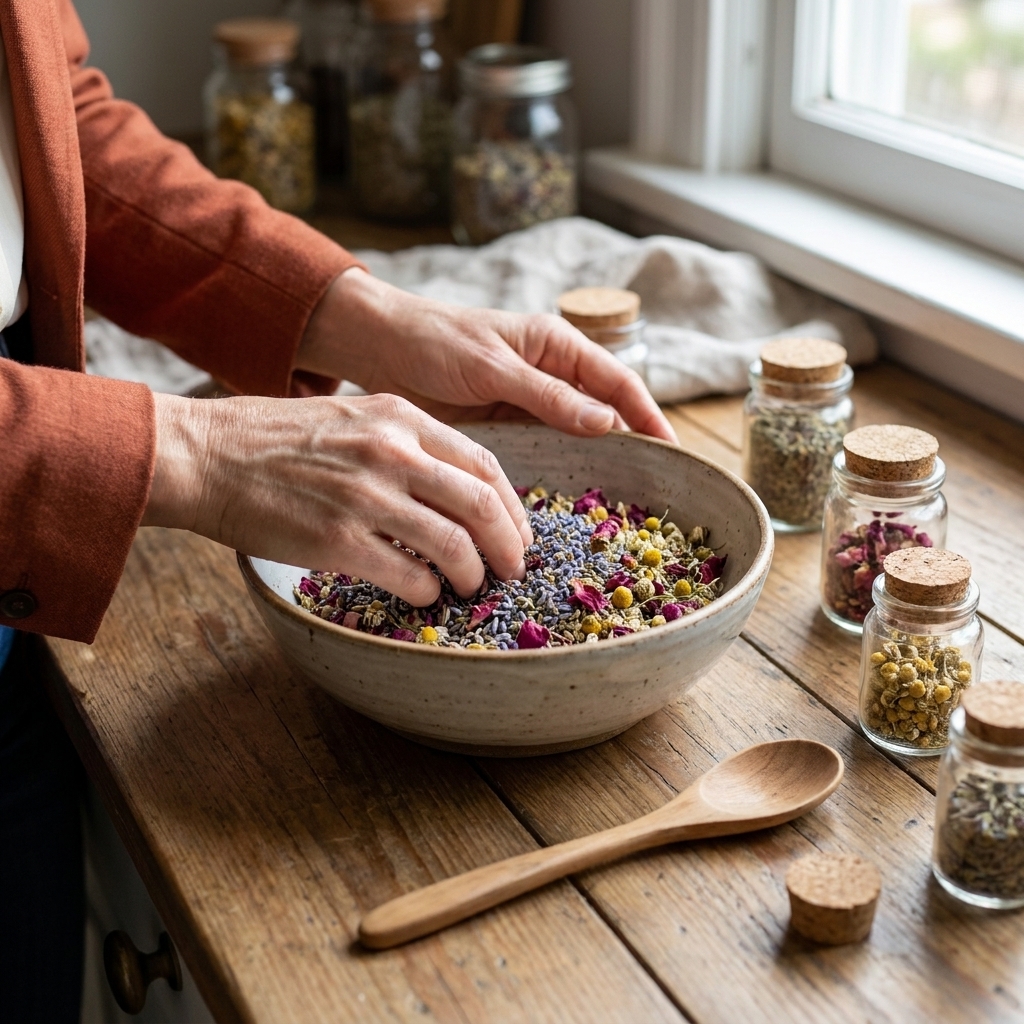
What is herbal tea?
Herbal “tea” is usually a tisane, meaning it is an infusion of plants that are not the tea plant (Camellia sinensis). So chamomile, peppermint, rooibos, hibiscus, lemon balm, and lavender all count. Because there is no true tea leaf in those blends, most herbal blends are naturally caffeine-free, with a few exceptions (like yerba mate, guayusa, and cacao or cocoa-husk blends that can contain small amounts of caffeine and theobromine).
Why it matters: herbal ingredients vary wildly in strength, sweetness, tartness, and aroma. A tiny pinch of lavender can dominate an entire jar, while you can add heaps of rooibos without things getting shouty.
The 3-part blending formula
When I was a librarian, I learned that adults love a “rule” because it gives us permission to play. This is that rule.
Part 1: Base (foundation)
Your base makes up most of the blend. It should taste pleasant on its own and steep reliably.
- Great bases: rooibos, honeybush, oatstraw, tulsi (holy basil), lemon balm, peppermint or spearmint (use a bit less), nettle leaf (earthy), raspberry leaf (dry and green).
- Base job: carry flavor and texture so your accents do not feel lonely and sharp.
Part 2: Body (main flavor)
These ingredients add the main character notes: fruity, spicy, cozy, cooling, or floral. Think of them as the melody.
- Fruity/tart: hibiscus, rosehip, dried apple, dried orange peel
- Spicy/warming: cinnamon chips (cut cinnamon bark), ginger, cardamom pod pieces, clove (very strong)
- Floral/soft: chamomile, rose petals, jasmine flowers (strong), linden
Part 3: Sparkle (accents)
Accents are small but mighty. They are the high notes you smell before you even sip.
- Aromatic flowers: lavender, elderflower
- Citrus lift: lemon peel, grapefruit peel
- Fresh edge: a touch of peppermint, a few fennel seeds
- Visual joy: calendula petals, cornflower petals (mostly for color and vibe)
Beginner ratios
Pick one of these and you will land in a good place:
- Everyday blend: 60% base, 30% body, 10% sparkle
- Bold and flavored: 50% base, 40% body, 10% sparkle
- Delicate floral: 70% base, 20% body, 10% sparkle (keep the florals gentle)
Shortcut: If math makes you tired, think in “parts.” For the everyday blend, use 6 parts base, 3 parts body, 1 part sparkle. A “part” can be 1 teaspoon, 1 tablespoon, or 1 scoop, as long as you stay consistent.
One small mistake to avoid
The fastest way to get a muddy, confusing cup is to add too many things at once. For your first few blends, keep it to 3 to 5 ingredients total (base, body, sparkle, plus maybe one supporting note). You can always get fancy later.
Tools and ingredients
You do not need a lab coat. You do need a few things that help you stay consistent.
Simple tools
- Measuring spoons (or a small scoop)
- A mixing bowl and spoon
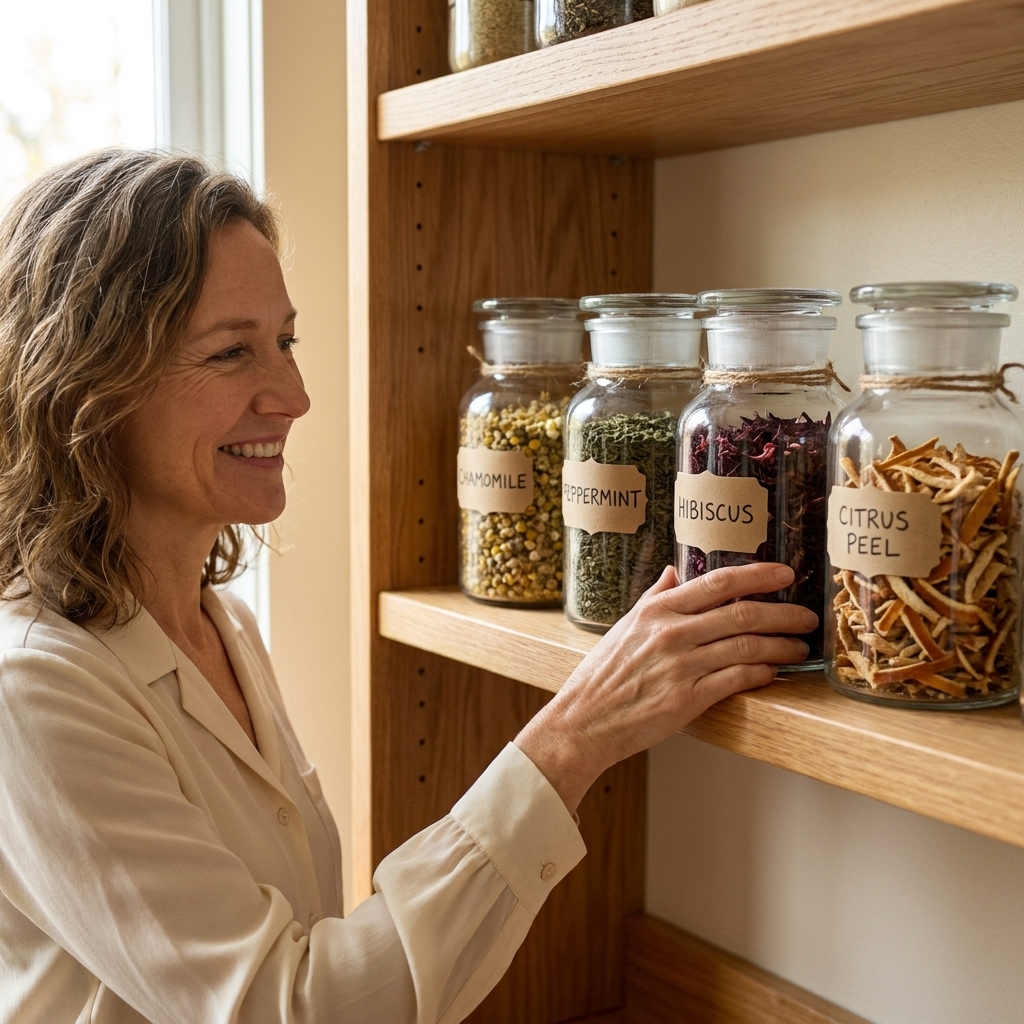
- Small jars or tins with tight lids
- Labels (masking tape works beautifully)
- Optional but lovely: a small kitchen scale for repeatable blends
Buying herbs without overwhelm
Start with 6 to 10 ingredients total. Enough to play, not enough to turn your pantry into a Victorian apothecary.
- Look for: bright color, strong aroma, minimal dust at the bottom of the bag.
- Consider cut size: if one ingredient is powder-fine and the rest are chunky, it will sink, over-steep, and make your last cup bitter or murky. Aim for roughly similar cut sizes when you can.
- Food-grade only: buy from tea shops, herb suppliers, or reputable spice vendors.
How to taste and tweak
Here is my favorite beginner method: steep mini test cups. When you test small, you feel free to experiment.
Quick tasting steps
- Smell each ingredient on its own. Write one word: “minty,” “jammy,” “woody,” “perfume,” “lemon.”
- Build a tiny blend using teaspoons. Example: 6 tsp base, 3 tsp body, 1 tsp sparkle.
- Steep 1 teaspoon of the blend in 8 oz hot water.
- Start at 6 minutes, then taste.
- Adjust one thing only in the next test so you know what caused the change.
Steeping guidelines
- Leafy herbs (lemon balm, mint, chamomile): near-boiling water, 5 to 7 minutes
- Roots and bark (ginger, cinnamon, licorice root): for a stronger cup, try a decoction by simmering 10 to 15 minutes, or steep 8 to 10 minutes if cut small and you want something gentler
- Tart fruits and flowers (hibiscus, rosehip): 5 to 8 minutes, then adjust to taste
Gentle warning: lavender, clove, and fennel can take over quickly. Start with a “pinch,” not a “pour.”
Balancing sweetness and tartness
If a blend tastes too sharp, you do not have to reach for sweetener first. Try swapping some hibiscus or rosehip for naturally mellowing ingredients like dried apple, rooibos, cinnamon, or orange peel. If it tastes too soft or sweet, add brightness with a touch of citrus peel or a small pinch of hibiscus, then shorten your steep if needed.
Five signature blends
Each recipe uses the 6-3-1 “parts” method. You can use teaspoons for a small batch or tablespoons for a jar-sized batch.
1) Cozy Evening Chamomile
- 6 parts chamomile
- 3 parts lemon balm
- 1 part lavender (or half a part if you are lavender-shy)
Tastes like: soft honey-floral with a clean finish. Lovely before bed.
2) Minty After-Meal Reset
- 6 parts spearmint
- 3 parts peppermint
- 1 part fennel seed
Tastes like: crisp, cooling, and lightly sweet. Great hot or iced.
3) Ruby Hibiscus Citrus Cooler
- 6 parts hibiscus
- 3 parts rosehip
- 1 part orange peel
Tastes like: tart berry-lemonade energy. Sweeten if you want, or mellow it with a little dried apple in the next batch.
4) Vanilla Rooibos “Dessert” Mug
- 6 parts rooibos
- 3 parts dried apple pieces
- 1 part cinnamon chips (cut cinnamon bark)
Tastes like: warm baked fruit. Add a splash of milk for a cozy treat.
5) Garden Spa Blend
- 6 parts tulsi (holy basil)
- 3 parts lemongrass
- 1 part calendula petals
Tastes like: fresh, lemony, and calm. This is my “reset my brain” blend.
Make your own blend
If you want a “create-your-own” template, here is one that keeps things balanced.
Step 1: Choose your base (6 parts)
- Rooibos for smooth and naturally sweet
- Lemon balm for gentle lemon-herb
- Oatstraw for mellow, grassy comfort
- Peppermint or spearmint for strong, refreshing (try 4 to 5 parts instead of 6)
Step 2: Choose your body (3 parts)
- Chamomile for soft floral
- Hibiscus for tart brightness
- Dried apple for sweetness
- Ginger for heat
Step 3: Choose your sparkle (1 part)
- Citrus peel for lift
- Lavender for perfume
- Cardamom for cozy spice
- Rose petals for romance
Step 4: Name it and write it down
This sounds silly until you make a blend you love and cannot recreate it. Label your jar with:
- Ingredients and parts
- Date blended
- Your steeping note (example: “1.5 tsp, 8 oz, 7 min”)
Storing your blends
Dried herbs are happiest when they are cool, dark, and dry. Think “pantry,” not “sunny windowsill.”
Best storage practices
- Airtight containers: glass jars or tins with snug lids
- Avoid moisture: do not store above the kettle or dishwasher where steam happens
- Keep away from heat and light: heat fades delicate aromatics fast
- Small batches win: if you blend a month at a time, everything tastes brighter
How long do blends last?
It depends on the ingredient, but as a general home-blender guideline:
- Most leafy and floral blends: best within 6 to 12 months
- Roots, bark, and peels: often hold up 12 to 18 months
Your nose is your best tool. If it smells like “old pantry” instead of “hello, lovely,” it is time to refresh.
Safety notes
Herbal tea is still plant medicine-adjacent, even when we are enjoying it as a hobby. Most common tea herbs are gentle, but a few basic cautions keep things comfortable.
- If you are pregnant, nursing, on medication, or managing a condition: check with a qualified healthcare professional before using unfamiliar herbs regularly.
- Allergies happen: if you have ragweed allergies, for example, chamomile can be an issue for some people.
- Licorice root: can raise blood pressure for some people when used frequently.
- Essential oils are not the same thing: do not add essential oils to tea blends.
Troubleshooting
Problem: It tastes flat
- Add a bright accent: citrus peel, a touch of hibiscus, or a pinch of ginger.
- Increase aroma: a little more mint or a tiny pinch of lavender.
Problem: It is too perfume-y
- Reduce florals by half, especially lavender and jasmine.
- Add more base like rooibos or oatstraw to round it out.
Problem: Too tart
- Cut hibiscus back and replace with dried apple or rooibos.
- Steep for less time.
Problem: Too weak
- Use more leaf: try 2 teaspoons per 8 oz instead of 1.
- Steep longer, or cover the mug while steeping to hold in aroma.
A tiny ritual
If you want this hobby to feel soothing instead of like another “project,” try this: choose one evening a week to blend a small jar. Put on music, label it with a silly name, and make yourself a test cup right away.
You are not trying to manufacture a perfect signature tea on the first try. You are building a personal little library of flavors. And as a former librarian, I can promise you: a well-loved collection is never built in one trip.